


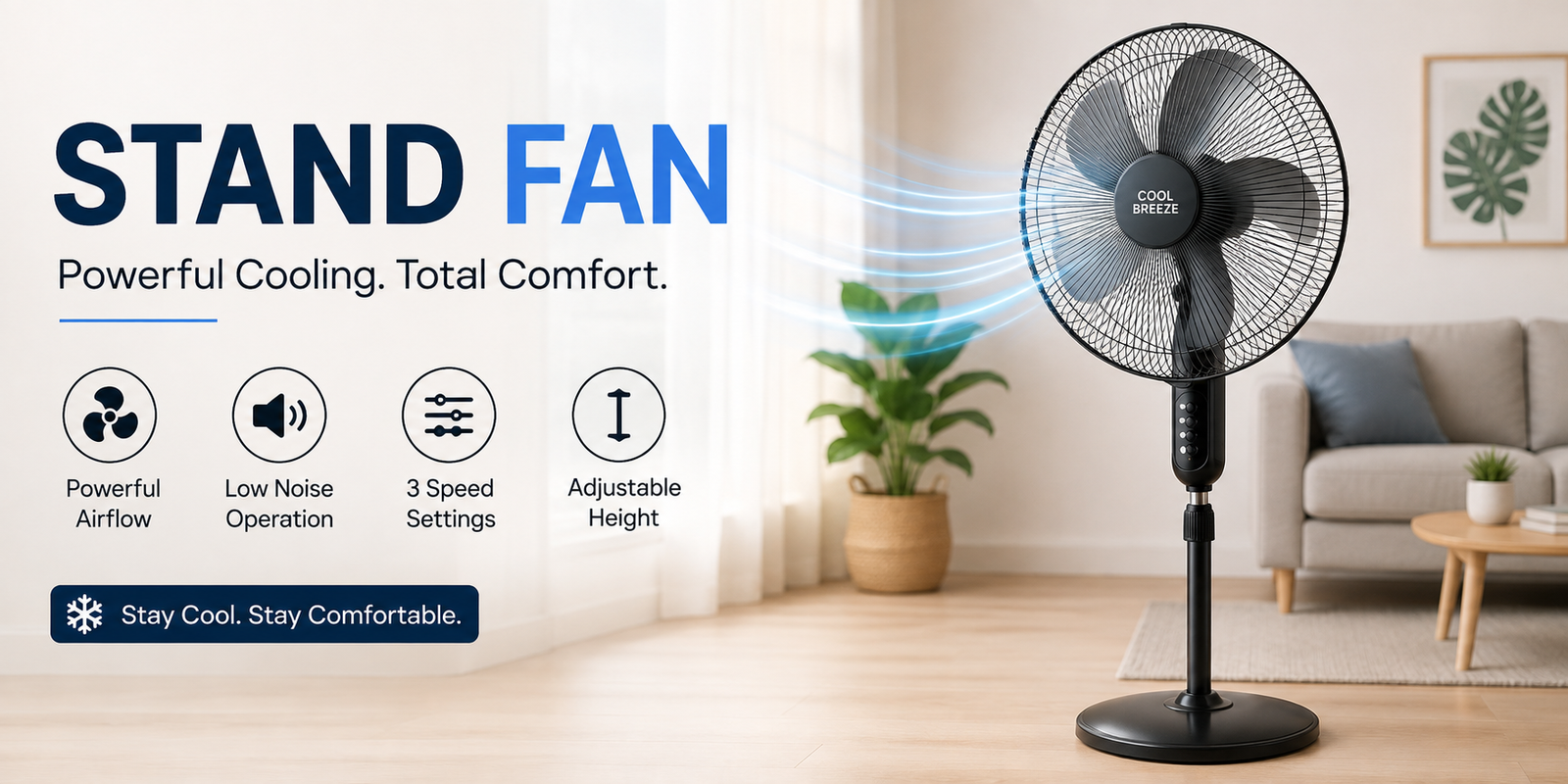
A stand fan is one of the most practical and affordable cooling appliances you can own. Whether you’re trying to stay comfortable during the summer, improve airflow in your home, or reduce your reliance on air conditioning, a quality stand fan can make a noticeable difference. Unlike ceiling fans or wall-mounted fans, stand fans are portable, adjustable, and suitable for almost every room in the house. They are also easy to set up and require very little maintenance, making them a favorite choice for homeowners, renters, students, and office workers alike.
Many people assume that all stand fans are the same, but modern models come with a wide variety of features designed to improve comfort and convenience. From adjustable height and multiple speed settings to remote controls, timers, and energy-efficient motors, today’s stand fans offer much more than simple air circulation. Choosing the right one depends on your room size, cooling needs, budget, and personal preferences.
In this complete guide, you’ll learn everything you need to know about stand fans, including how they work, their benefits, important features, different types, buying tips, maintenance advice, and answers to common questions. By the end, you’ll have all the information needed to select the perfect stand fan for your home or office.
What Is a Stand Fan?
A stand fan, also known as a pedestal fan, is a portable electric fan mounted on a height-adjustable stand. It uses rotating blades powered by an electric motor to move air around a room, creating a cooling effect through increased air circulation. Unlike ceiling fans, stand fans can easily be moved from one location to another, making them extremely versatile.
Most stand fans feature an oscillating head that rotates from side to side. This allows the fan to distribute cool air across a wider area instead of concentrating airflow in one direction. Users can also tilt the fan head upward or downward to target airflow exactly where it is needed.
Stand fans are available in different sizes, blade diameters, and motor capacities. Whether you need a compact fan for a bedroom or a high-powered model for a large living room, there are plenty of options available to suit different spaces and budgets.
Why Stand Fans Are So Popular
One of the biggest reasons people choose stand fans is affordability. Compared to installing an air conditioning system, purchasing a stand fan costs significantly less while still providing immediate comfort during warm weather.
Another advantage is portability. Since the fan isn’t permanently installed, you can move it between bedrooms, offices, kitchens, garages, or even outdoor covered spaces. This flexibility makes it one of the most useful household appliances.
Stand fans are also energy efficient. Running a stand fan typically consumes much less electricity than an air conditioner. For homeowners looking to reduce electricity bills while maintaining comfort, a stand fan is an excellent investment.
Main Features to Look for in a Stand Fan
Modern stand fans offer numerous features that improve convenience and performance. Understanding these features helps buyers choose the best model for their needs.
Adjustable height is one of the most useful features. Being able to raise or lower the fan allows airflow to reach people whether they’re sitting, standing, or lying in bed.
Multiple speed settings provide better control over airflow. Most stand fans include low, medium, and high speeds, allowing users to choose the ideal level of cooling depending on weather conditions.
Oscillation is another essential feature. Instead of blowing air in one direction, the fan rotates from left to right, covering a much larger area and improving overall air circulation.
Premium models may also include remote controls, digital displays, programmable timers, sleep modes, quiet motors, and energy-saving technology for added convenience.
Different Types of Stand Fans
Not every stand fan is built for the same purpose. Understanding the different types makes choosing easier.
Standard stand fans are the most common. They are affordable, reliable, and suitable for bedrooms, living rooms, and offices. They usually include three speed settings and oscillation.
High-velocity stand fans use powerful motors that generate strong airflow. These are ideal for workshops, garages, warehouses, gyms, and larger rooms where maximum air movement is required.
Smart stand fans represent the latest technology. Many connect to Wi-Fi and allow users to control fan speed, timers, and oscillation through smartphone apps or voice assistants. They are perfect for modern smart homes.
Benefits of Using a Stand Fan
One major benefit is improved comfort during hot weather. Constant airflow helps sweat evaporate more quickly, making people feel cooler even without lowering room temperature.
Stand fans also improve indoor air circulation. Better airflow prevents rooms from feeling stuffy and helps distribute fresh air more evenly throughout the space.
Another advantage is compatibility with air conditioning. When used alongside an AC unit, a stand fan helps circulate cooled air more effectively. This allows homeowners to raise the thermostat slightly while maintaining comfort, resulting in lower electricity bills.
How to Choose the Right Stand Fan
Before purchasing a stand fan, consider the size of the room where it will be used. Larger rooms require bigger blades and more powerful motors to circulate air effectively.
Noise level is another important consideration. If you plan to use the fan while sleeping or working, choose a model designed for quiet operation. Many newer models produce minimal noise while maintaining excellent airflow.
Build quality should never be overlooked. Durable metal grills, sturdy bases, quality motors, and strong blades generally indicate a fan that will last for many years with proper maintenance.
Energy Efficiency and Electricity Consumption
One of the strongest advantages of stand fans is their low operating cost. Most residential stand fans consume between 40 and 80 watts, depending on size and motor power.
Compared to air conditioners that often consume over 1,000 watts, stand fans require only a fraction of the electricity. This makes them an economical cooling solution for daily use.
Energy-efficient models with DC motors consume even less electricity while providing comparable airflow. Although these fans may cost slightly more initially, they often save money over time through reduced energy consumption.
Proper Maintenance Tips
Regular cleaning is essential for maintaining good airflow. Dust naturally collects on the blades and protective grill, reducing efficiency if left unattended.
Before cleaning, always unplug the fan. Remove the front grill according to the manufacturer’s instructions and wipe the blades using a soft cloth. Stubborn dirt can usually be removed using mild soap and water.
Periodically inspect screws, moving joints, and the power cord for signs of wear or damage. Proper maintenance not only improves performance but also extends the lifespan of the fan.
Common Mistakes to Avoid
One common mistake is placing the fan too close to walls or furniture. Restricted airflow reduces efficiency and prevents proper air circulation throughout the room.
Many users also forget to clean accumulated dust. Dirty blades force the motor to work harder, increasing noise while reducing cooling performance.
Ignoring unusual sounds is another mistake. Grinding, rattling, or excessive vibration may indicate loose parts or motor issues that should be addressed before they become serious problems.
Stand Fan vs Ceiling Fan
Although both appliances improve air circulation, they serve different purposes. Ceiling fans provide consistent airflow throughout an entire room but remain permanently installed.
Stand fans offer greater flexibility because they can easily be moved wherever cooling is needed. They also allow users to direct airflow toward specific areas.
For many households, combining both appliances provides the best overall cooling. The ceiling fan circulates air throughout the room while the stand fan delivers targeted airflow where people are sitting or sleeping.
| Feature | Stand Fan | Ceiling Fan |
| Portability | Excellent | None |
| Installation | Very Easy | Professional Installation Often Needed |
| Adjustable Height | Yes | No |
| Direction Control | Excellent | Limited |
| Energy Efficiency | High | High |
| Initial Cost | Affordable | Moderate |
Are Stand Fans Worth Buying?
For most households, the answer is absolutely yes. Stand fans provide excellent cooling performance at an affordable price while consuming very little electricity.
They are especially valuable for people living in warm climates where improved airflow significantly increases comfort. Even homes with air conditioning benefit from using stand fans because they help distribute cooled air more efficiently.
Whether you need extra cooling for your bedroom, office, living room, or workspace, a quality stand fan remains one of the smartest household appliances you can purchase.
Conclusion
A stand fan continues to be one of the most practical, cost-effective, and versatile cooling solutions available today. Its portability, adjustable design, energy efficiency, and ease of use make it suitable for nearly every home and workplace. With numerous sizes, styles, and advanced features available, finding a model that meets your specific needs has never been easier. By understanding the different types, comparing important features, and following proper maintenance practices, you can enjoy years of reliable performance. Investing in a quality stand fan not only improves everyday comfort but also helps reduce cooling costs while maintaining healthy air circulation throughout your living space.
You May Also Read: white bridal dress