


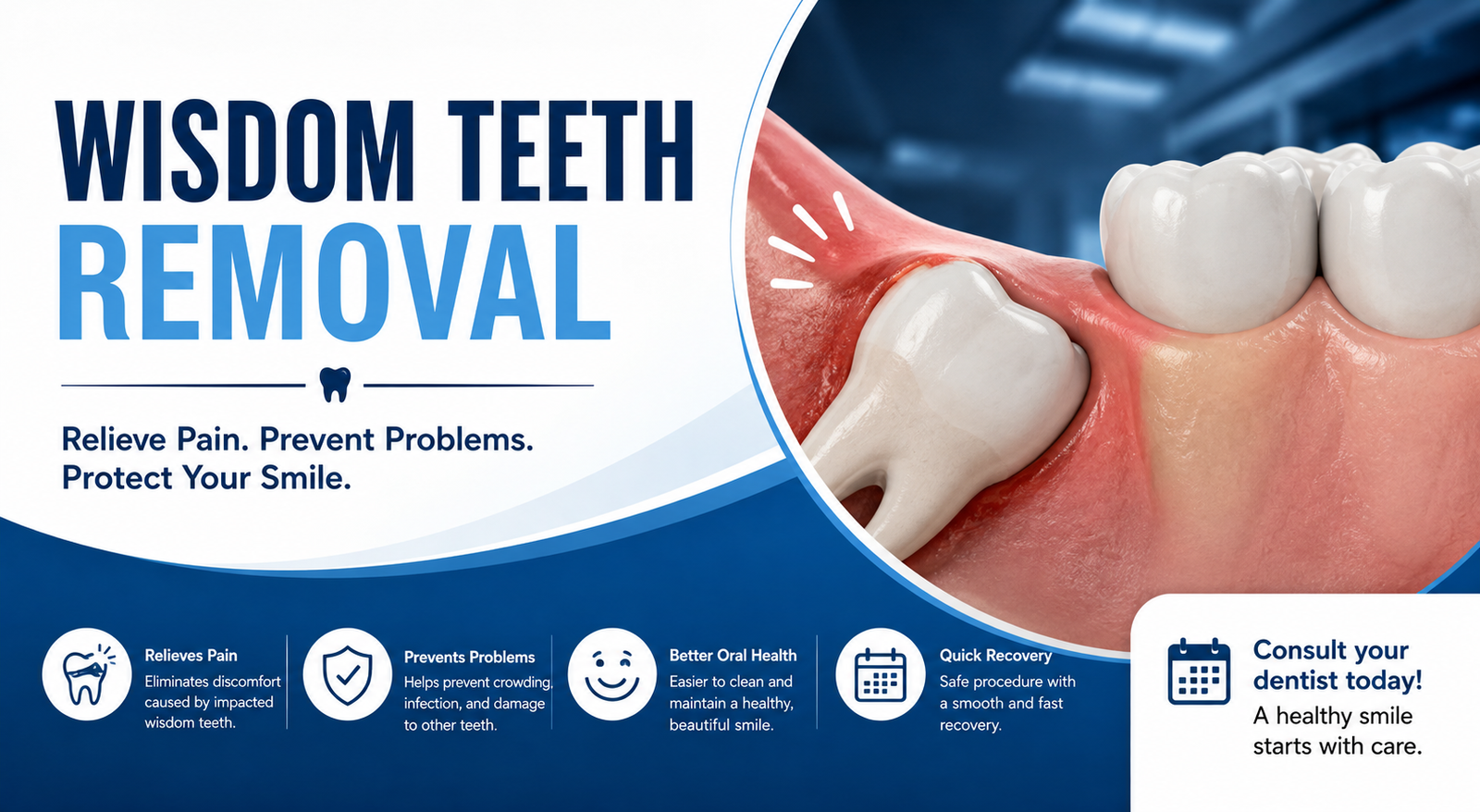
Wisdom teeth removal is one of the most common oral surgery procedures performed worldwide. While some people never experience problems with their wisdom teeth, many develop pain, swelling, infections, or overcrowding that require extraction. Understanding what to expect before, during, and after the procedure can help reduce anxiety and ensure a smoother recovery.
Wisdom teeth, also known as third molars, usually appear between the ages of 17 and 25. Because modern jaws often don’t have enough room for these extra molars, they may become impacted, partially erupt, or grow at awkward angles. These issues can damage neighboring teeth, cause recurring infections, and affect overall oral health.
In this comprehensive guide, you’ll learn everything about wisdom teeth removal, including why it’s necessary, how the procedure works, wisdom teeth removal recovery, potential side effects, aftercare tips, recovery time, foods to eat, costs, and answers to the most common patient questions.
What Are Wisdom Teeth?
Wisdom teeth are the third and final set of molars located at the back of your mouth. Most adults have four wisdom teeth—one in each corner of the mouth. However, some people naturally have fewer, while others never develop them at all.
Thousands of years ago, wisdom teeth helped our ancestors chew tough foods like roots, raw meat, and nuts. Today, dietary changes and smaller jaw sizes mean these teeth often lack enough space to erupt properly.
When wisdom teeth cannot emerge normally, they become impacted. Impacted teeth may remain trapped beneath the gums or partially break through the surface, increasing the risk of infection and discomfort.
Signs You May Need Wisdom Teeth Removal
Not everyone needs wisdom teeth removed, but certain symptoms indicate it’s time to visit a dentist or oral surgeon.
Common signs include:
- Persistent pain in the back of the mouth
- Swollen, red, or bleeding gums
- Jaw stiffness or difficulty opening the mouth
- Bad breath that doesn’t improve
- Frequent gum infections
- Headaches caused by pressure
- Tooth decay around partially erupted wisdom teeth
Sometimes wisdom teeth cause no symptoms at all. During routine dental X-rays, your dentist may discover impacted teeth that could lead to future complications if left untreated.
Why Dentists Recommend Wisdom Teeth Removal
Dentists recommend extraction when wisdom teeth threaten your oral health or create future risks.
Common reasons include:
- Impacted wisdom teeth
- Severe tooth decay
- Gum disease
- Repeated infections
- Damage to nearby teeth
- Orthodontic treatment planning
- Development of cysts around impacted teeth
- Overcrowding that affects tooth alignment
Healthy wisdom teeth that erupt fully, align correctly, and are easy to clean may not require removal. Your dentist will evaluate your individual situation using clinical examinations and X-rays.
Types of Wisdom Teeth
Understanding the position of your wisdom teeth helps explain why some extractions are simple while others require surgery.
Fully Erupted Wisdom Teeth
These teeth emerge completely above the gum line and function like normal molars. If healthy and easy to clean, they may not need removal.
Partially Impacted Wisdom Teeth
Only part of the tooth breaks through the gums. Food particles and bacteria easily collect beneath the gum flap, leading to infections.
Completely Impacted Wisdom Teeth
These teeth remain entirely beneath the gums or jawbone. Surgical removal is usually necessary.
Soft Tissue Impaction
The tooth is covered mainly by gum tissue, making removal less complex than bony impactions.
Bony Impaction
The tooth remains trapped inside the jawbone, requiring a more advanced surgical procedure.
Preparing for Wisdom Teeth Removal
Preparation begins with a consultation. Your dentist or oral surgeon will examine your mouth, review X-rays, and determine the safest treatment approach.
You’ll discuss anesthesia options, including local anesthesia, IV sedation, or general anesthesia depending on the complexity of your case and comfort level.
Before surgery:
- Arrange transportation if you’ll receive sedation.
- Follow fasting instructions if required.
- Wear comfortable clothing.
- Inform your dentist about medications and medical conditions.
- Avoid smoking before and after surgery.
Proper preparation contributes to a smoother procedure and faster recovery.
Wisdom Teeth Removal Procedure
Many patients worry about surgery, but the procedure is usually straightforward.
First, anesthesia is administered to ensure comfort. Once the area is numb, the dentist or oral surgeon gently removes the wisdom tooth. If the tooth is impacted, a small incision may be made in the gum, and the tooth may be divided into smaller sections for easier removal.
After extraction, the socket is cleaned, stitches may be placed if necessary, and gauze is applied to control bleeding.
Simple extractions often take less than 20 minutes, while removing four impacted wisdom teeth generally takes 45 to 90 minutes.
Does Wisdom Teeth Removal Hurt?
One of the biggest concerns patients have is wisdom teeth removal pain.
During surgery, anesthesia prevents pain, although you may feel pressure or movement. After the numbness wears off, mild to moderate discomfort is expected for several days.
Pain usually peaks within the first 24 to 48 hours before gradually improving. Your dentist may recommend prescription medication or over-the-counter pain relievers to manage discomfort.
Following aftercare instructions significantly reduces pain and lowers the risk of complications.
Wisdom Teeth Removal Recovery
Recovery varies from person to person, but most patients begin feeling much better within a week.
Day 1
Bleeding is normal for several hours. Bite gently on gauze and use ice packs to reduce swelling.
Days 2–3
Swelling usually reaches its peak. Continue taking prescribed medications and avoid strenuous activities.
Days 4–7
Pain decreases noticeably, swelling begins to subside, and you can slowly return to normal routines.
Week 2
Most patients resume regular eating habits and daily activities with minimal discomfort.
Complete Healing
Although you may feel normal after one or two weeks, the gum tissue and bone continue healing for several weeks or even months.
Wisdom Teeth Removal Recovery Time
Most people return to work or school within three to five days. Full healing typically occurs within four to six weeks, depending on the complexity of the extraction and individual healing ability.
Wisdom Teeth Removal Aftercare
Proper wisdom teeth removal aftercare is essential for preventing infection and promoting faster healing.
Follow these tips:
- Rest during the first 24 hours.
- Apply ice packs for swelling.
- Take medications exactly as directed.
- Keep your head elevated while sleeping.
- Avoid smoking and vaping.
- Do not drink through a straw.
- Rinse gently with warm salt water after 24 hours.
- Brush carefully while avoiding extraction sites.
Ignoring aftercare instructions can increase the risk of dry socket and delayed healing.
Wisdom Teeth Removal Foods
Eating the right foods supports healing and minimizes irritation.
Best Foods to Eat
- Yogurt
- Applesauce
- Mashed potatoes
- Smoothies without a straw
- Oatmeal
- Scrambled eggs
- Cottage cheese
- Broth-based soups
- Avocados
- Soft pasta
Foods to Avoid
- Chips
- Popcorn
- Nuts
- Seeds
- Crunchy bread
- Spicy foods
- Extremely hot foods
- Sticky candy
- Alcohol
- Carbonated drinks during the early healing period
| Safe Foods | Foods to Avoid |
| Yogurt | Chips |
| Mashed potatoes | Popcorn |
| Scrambled eggs | Nuts |
| Applesauce | Hard bread |
| Soup | Spicy foods |
| Oatmeal | Sticky candy |
Wisdom Teeth Removal Side Effects
Most side effects are temporary and improve with proper care.
Common wisdom teeth removal side effects include:
- Swelling
- Mild bleeding
- Jaw stiffness
- Bruising
- Temporary numbness
- Difficulty chewing
- Mild bad breath during healing
Rare complications include dry socket, infection, prolonged bleeding, nerve injury, and sinus issues involving upper wisdom teeth.
Contact your dentist immediately if you develop severe pain several days after surgery, persistent fever, excessive bleeding, pus, or difficulty breathing.
Simple Extraction vs Surgical Extraction
| Feature | Simple Extraction | Surgical Extraction |
| Tooth Position | Fully erupted | Impacted or partially erupted |
| Incision Needed | No | Yes |
| Recovery Time | Shorter | Longer |
| Procedure Complexity | Low | Moderate to High |
| Average Cost | Lower | Higher |
Understanding the difference helps patients prepare for recovery expectations and treatment costs.
How Much Does Wisdom Teeth Removal Cost?
The cost depends on several factors, including the complexity of the extraction, your location, the type of anesthesia used, and dental insurance coverage.
Simple extractions generally cost less than surgical extractions because they require less time and fewer specialized techniques.
Many dental insurance plans partially cover medically necessary wisdom teeth removal. Patients without insurance should ask about payment plans or financing options offered by their dental provider.
Common Myths About Wisdom Teeth Removal
Several misconceptions create unnecessary fear.
Myth: Everyone must remove their wisdom teeth.
Fact: Healthy, properly positioned wisdom teeth may never require extraction.
Myth: Recovery always takes months.
Fact: Most people recover enough to resume normal activities within a week.
Myth: Wisdom teeth removal is extremely painful.
Fact: Modern anesthesia and medications make the procedure much more comfortable than many patients expect.
Myth: Adults cannot safely have wisdom teeth removed.
Fact: Adults can successfully undergo wisdom teeth extraction, although healing may take slightly longer than in younger patients.
When Should You Call Your Dentist?
Seek professional care immediately if you experience:
- Heavy bleeding that doesn’t stop
- Severe swelling after several days
- Fever or chills
- Difficulty swallowing or breathing
- Pus around the extraction site
- Persistent numbness
- Severe pain that suddenly worsens after initial improvement
Prompt treatment can prevent more serious complications.
Finding Wisdom Teeth Removal Near Me
If you’re searching for wisdom teeth removal near me, choose a licensed dentist or oral surgeon with experience in third molar extractions. Look for providers who offer comprehensive consultations, digital X-rays, modern anesthesia options, transparent pricing, and clear postoperative support. Reading verified patient reviews and confirming credentials can help you make an informed decision.
Conclusion
Wisdom teeth removal is a routine and effective procedure that helps prevent pain, infections, overcrowding, and long-term dental complications. While every patient’s experience is different, proper preparation, following your dentist’s instructions, and maintaining excellent wisdom teeth removal aftercare can significantly improve healing and reduce the risk of complications.
Whether you’re dealing with impacted teeth or planning preventive extraction, consulting a qualified dental professional is the best way to determine the right treatment for your individual needs. With modern techniques and proper care, most patients recover quickly and return to their normal routines with improved oral health.
Frequently Asked Questions
1. How long is wisdom teeth removal recovery?
Most people recover enough to return to normal activities within three to seven days, while complete healing may take four to six weeks.
2. Is wisdom teeth removal painful?
The procedure itself is not painful because anesthesia is used. Mild discomfort afterward is normal and can usually be managed with prescribed or over-the-counter medications.
3. What foods can I eat after wisdom teeth removal?
Soft foods such as yogurt, mashed potatoes, soup, scrambled eggs, oatmeal, applesauce, and smoothies without a straw are ideal during the first few days.
4. What are the most common wisdom teeth removal side effects?
Temporary swelling, bruising, mild bleeding, jaw stiffness, and soreness are common. Serious complications are uncommon when aftercare instructions are followed.
5. When can I brush my teeth after wisdom teeth removal?
You can gently brush your other teeth the same day, but avoid the extraction sites for the first 24 hours. Resume careful cleaning as instructed by your dentist.
6. How long does wisdom teeth removal pain last?
Pain is usually most noticeable during the first two days and gradually improves over the following week.
7. Do all wisdom teeth need to be removed?
No. If wisdom teeth are healthy, fully erupted, properly positioned, and easy to clean, your dentist may recommend monitoring rather than extraction.
You May Also Read: movie theaters near me