


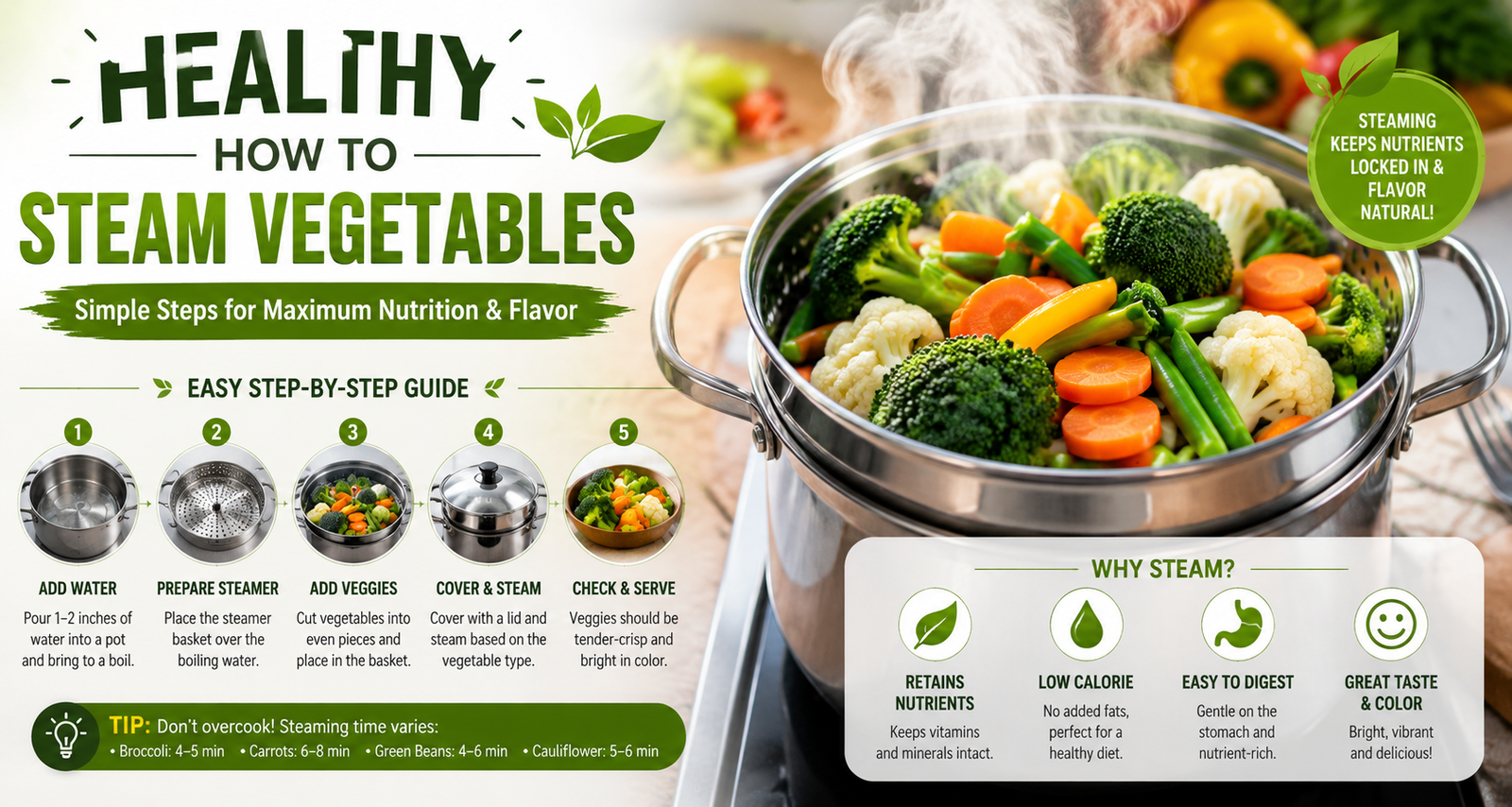
Steaming vegetables is one of the easiest and healthiest ways to prepare a delicious meal. Unlike boiling, steaming uses hot vapor instead of submerging vegetables in water, helping them retain more of their natural color, texture, flavor, and nutrients. Whether you’re preparing a quick weeknight dinner, meal-prepping for the week, or making soft vegetables for a baby, learning how to steam vegetables correctly can make a noticeable difference in your cooking.
Many people assume steaming is complicated or requires expensive equipment, but that’s far from the truth. You can steam vegetables using a traditional steamer, a microwave, a pressure cooker, or even a simple pot with a lid. With the right technique, you’ll enjoy tender-crisp vegetables every time without overcooking them.
In this guide, you’ll learn how to steam vegetables in a steamer, how to steam vegetables without a steamer, how to steam vegetables in a microwave, and other popular methods. You’ll also discover practical tips, common mistakes to avoid, and the best techniques for preserving flavor and nutrition.
Why Steaming Vegetables Is a Healthy Choice
Steaming is widely considered one of the healthiest cooking methods because it cooks food gently without requiring large amounts of oil or fat. Since vegetables aren’t immersed in boiling water, many water-soluble vitamins remain better preserved than with boiling.
Some of the biggest benefits of steaming include:
- Helps retain vitamins such as Vitamin C and several B vitamins.
- Preserves the vegetables’ natural color and texture.
- Requires little or no added oil.
- Enhances the natural flavor of fresh produce.
- Makes vegetables easier to digest while keeping them satisfying.
Steamed vegetables are also incredibly versatile. They can be served as a side dish, mixed into salads, added to grain bowls, or paired with lean proteins for a balanced meal.
Steaming vs. Boiling: Which Is Better?
Although both methods cook vegetables using heat, they produce different results.
| Feature | Steaming | Boiling |
| Nutrient Retention | Excellent | Moderate |
| Flavor | Rich and natural | Can become diluted |
| Texture | Crisp-tender | Often softer |
| Water Usage | Very little | Large amount |
| Best For | Most vegetables | Potatoes, pasta, root vegetables |
For vegetables like broccoli, asparagus, green beans, and carrots, steaming usually provides the best balance of flavor, nutrition, and texture.
Equipment You Can Use to Steam Vegetables
One of the biggest advantages of steaming is that you don’t need special equipment. Depending on what you already have in your kitchen, several methods work well.
How to Steam Vegetables in a Steamer
A traditional steamer basket is one of the easiest and most effective tools for steaming vegetables.
Here’s how:
- Add about one inch of water to a pot.
- Place the steamer basket above the water level.
- Bring the water to a boil.
- Arrange the vegetables in a single layer.
- Cover with a lid.
- Steam until the vegetables are tender but still slightly crisp.
Avoid letting the vegetables touch the boiling water, as this can lead to uneven cooking.
How to Steam Vegetables Without a Steamer
If you don’t own a steamer basket, don’t worry. How to steam vegetables without a steamer is surprisingly simple.
You can use:
- A metal colander placed over a pot.
- A heat-safe plate resting on aluminum foil balls.
- A fine mesh strainer.
- A pot with a tightly fitting lid and a small rack.
Simply add a small amount of water to the pot, place the vegetables above the water, cover, and allow the steam to cook them evenly.
How to Steam Vegetables in Microwave
Learning how to steam vegetables in microwave is perfect for busy days.
Follow these steps:
- Place chopped vegetables in a microwave-safe bowl.
- Add two to three tablespoons of water.
- Cover with a microwave-safe lid or plate.
- Microwave on high for two to five minutes, depending on the vegetable.
- Carefully remove the lid to avoid steam burns.
Microwave steaming is especially convenient for broccoli, carrots, green beans, peas, and cauliflower.
How to Steam Vegetables in an Electric Steamer
If you regularly prepare vegetables, learning how to steam vegetables in an electric steamer can save time.
Electric steamers automatically maintain the proper temperature and often feature multiple tiers, allowing you to cook different vegetables simultaneously.
Most models only require filling the water reservoir, placing the vegetables in trays, selecting the timer, and waiting until they’re perfectly cooked.
How to Steam Vegetables in Pressure Cooker
Many home cooks also want to know how to steam vegetables in pressure cooker.
Place a steaming rack inside the cooker and add about one cup of water. Arrange the vegetables on the rack without letting them touch the water. Cook using low pressure for one to three minutes depending on the vegetable, then perform a quick pressure release to prevent overcooking.
This method is ideal for potatoes, carrots, beets, and other dense vegetables.
How to Steam Vegetables in Stovetop
The classic stovetop method remains one of the most reliable options.
To learn how to steam vegetables in stovetop, simply fill a pot with a small amount of water, insert a steamer basket or heat-safe colander, bring the water to a boil, add the vegetables, cover with a lid, and cook until fork-tender.
Because you can easily monitor the vegetables, the stovetop method gives you excellent control over texture.
Step-by-Step Guide to Perfectly Steamed Vegetables
Regardless of the steaming method you choose, following a few simple steps will consistently produce better results.
Step 1: Choose Fresh Vegetables
Fresh vegetables usually steam more evenly than older produce. Look for vegetables that are firm, brightly colored, and free of bruises.
Popular choices include:
- Broccoli
- Cauliflower
- Green beans
- Carrots
- Zucchini
- Bell peppers
- Asparagus
- Brussels sprouts
- Spinach
- Sweet potatoes
Step 2: Wash Thoroughly
Always rinse vegetables under cool running water to remove dirt and residue. Leafy greens may require several rinses to remove trapped soil.
Step 3: Cut Evenly
Uniform pieces cook at the same rate. Large chunks often remain undercooked while smaller pieces become overly soft.
As a general rule:
- Broccoli florets should be similar in size.
- Carrot slices should have equal thickness.
- Potatoes should be cut into evenly sized cubes.
Consistent cutting improves both appearance and cooking performance.
Step 4: Don’t Use Too Much Water
One common mistake is adding excessive water to the pot. Only enough water to create steam is needed. If the vegetables sit in water, they’ll begin to boil instead of steam.
Step 5: Arrange Vegetables Properly
Avoid overcrowding the basket. Leave enough space for hot steam to circulate around every piece. If necessary, steam in multiple batches instead of filling the basket completely.
Step 6: Cover the Pot
Keep the lid tightly closed while steaming. Every time you remove the lid, heat and steam escape, increasing cooking time and reducing efficiency.
Step 7: Test for Doneness
Insert a fork into the thickest piece. The vegetable should be tender but still slightly firm. Overcooked vegetables lose their bright color and become mushy, so check them near the end of the recommended cooking time.
Expert Tip
For the best flavor, season vegetables after steaming rather than before. A drizzle of olive oil, a squeeze of fresh lemon juice, cracked black pepper, fresh herbs, or a sprinkle of Parmesan cheese can enhance their natural taste without overpowering it.
In the next section, we’ll cover a complete steamed vegetables list, detailed cooking times for more than 20 vegetables, tips for how to steam vegetables for baby, seasoning ideas, storage advice, common mistakes to avoid, and answers to the most frequently asked questions.
Complete Steamed Vegetables List and Cooking Times
Cooking times vary depending on the size and type of vegetable. The goal is to achieve a tender-crisp texture that preserves both flavor and nutrients.
| Vegetable | Cooking Time | Best Texture |
| Broccoli | 4–5 minutes | Tender-crisp |
| Cauliflower | 5–7 minutes | Tender |
| Carrots (sliced) | 6–8 minutes | Tender |
| Green Beans | 4–6 minutes | Crisp-tender |
| Asparagus | 3–5 minutes | Tender |
| Spinach | 2–3 minutes | Wilted |
| Kale | 4–5 minutes | Tender |
| Peas | 3–4 minutes | Soft |
| Corn on the Cob | 7–10 minutes | Juicy |
| Brussels Sprouts | 6–8 minutes | Tender |
| Zucchini | 3–5 minutes | Slightly firm |
| Bell Peppers | 3–4 minutes | Crisp |
| Mushrooms | 4–5 minutes | Juicy |
| Cabbage | 5–7 minutes | Tender |
| Sweet Potatoes | 10–15 minutes | Soft |
| Potatoes | 12–18 minutes | Fork-tender |
| Beets | 20–30 minutes | Tender |
| Bok Choy | 3–4 minutes | Crisp |
| Artichokes | 25–35 minutes | Very tender |
| Eggplant | 6–8 minutes | Soft |
This steamed vegetables list covers many of the most common vegetables used in everyday cooking. Remember that larger pieces require slightly longer cooking times than smaller ones.
How to Steam Vegetables for Baby
Many parents choose steaming because it softens vegetables while preserving much of their natural nutrition.
If you’re learning how to steam vegetables for baby, choose vegetables such as carrots, sweet potatoes, peas, broccoli, pumpkin, and cauliflower.
Steam until very soft, then mash or blend with a little breast milk, formula, or water to create the desired consistency. Avoid adding salt, sugar, or spicy seasonings to baby food.
As babies grow, you can gradually leave small soft pieces for self-feeding.
Best Seasonings for Steamed Vegetables
Steamed vegetables don’t have to taste bland. A few simple ingredients can transform them into a flavorful side dish.
Try combinations like:
- Olive oil and lemon juice
- Garlic butter
- Fresh parsley and dill
- Parmesan cheese
- Black pepper
- Chili flakes
- Sesame oil and soy sauce
- Italian seasoning
- Fresh basil
- Smoked paprika
Adding seasoning after steaming helps preserve the vegetables’ natural flavor while allowing herbs and spices to stand out.
Common Mistakes to Avoid
Even though steaming is simple, a few mistakes can affect the final result.
Overcooking
Vegetables continue cooking from residual heat after they’re removed from the steamer. Remove them as soon as they become fork-tender.
Using Too Much Water
Only a small amount of water is needed to create steam. Too much water causes vegetables to boil instead.
Cutting Uneven Pieces
Different-sized pieces cook at different speeds, resulting in uneven texture.
Overcrowding the Basket
Steam needs room to circulate. Arrange vegetables in a single layer whenever possible.
Lifting the Lid Too Often
Every time the lid is removed, heat escapes and cooking slows down.
Forgetting to Season
A squeeze of lemon, herbs, or a drizzle of olive oil can greatly improve flavor.
Tips for Perfect Steamed Vegetables Every Time
Professional cooks rely on a few simple habits to achieve consistently great results.
- Use fresh vegetables whenever possible.
- Wash produce thoroughly before cooking.
- Cut vegetables into similar-sized pieces.
- Steam dense vegetables longer than leafy greens.
- Set a timer to prevent overcooking.
- Taste before serving.
- Season immediately after steaming.
- Serve vegetables while they’re hot for the best texture.
These small details make a noticeable difference in both appearance and taste.
Storing and Reheating Steamed Vegetables
If you have leftovers, proper storage helps maintain quality.
Store steamed vegetables in an airtight container in the refrigerator for up to four days.
To freeze them, cool the vegetables completely before transferring them to freezer-safe bags or containers.
For reheating:
- Microwave for 30–60 seconds.
- Steam again for one to two minutes.
- Warm gently in a skillet with a splash of water.
Avoid reheating for too long, as vegetables can become soft and lose their texture.
Are Steamed Vegetables Good for Weight Loss?
Yes. Steamed vegetables are naturally low in calories and high in fiber, making them an excellent choice for weight management.
They also help you:
- Feel full longer
- Increase daily vegetable intake
- Reduce added fats from cooking
- Support healthy digestion
- Create balanced meals with lean protein and whole grains
Replacing calorie-dense side dishes with steamed vegetables is a simple way to improve your overall diet.
Conclusion
Learning how to steam vegetables is a valuable kitchen skill that helps you prepare healthy, flavorful meals with minimal effort. Whether you’re using a traditional steamer, learning how to steam vegetables without a steamer, preparing them in microwave, in a steamer, in an electric steamer, in pressure cooker, or in stovetop, the key is to use gentle heat and avoid overcooking.
With the right cooking times, proper preparation, and simple seasonings, steamed vegetables become a delicious addition to almost any meal. From everyday dinners to meal prep and even learning how to steam vegetables for baby, steaming offers a quick, nutritious, and versatile cooking method that fits every kitchen.
Frequently Asked Questions
1. Is steaming vegetables healthier than boiling?
In many cases, yes. Steaming generally preserves more water-soluble vitamins and helps vegetables maintain their natural flavor, color, and texture.
2. Can I steam frozen vegetables?
Yes. Frozen vegetables can be steamed directly without thawing. They may require one or two extra minutes of cooking time compared to fresh vegetables.
3. How do I know when vegetables are done?
Insert a fork into the thickest piece. It should slide in easily while the vegetable still feels slightly firm.
4. Can I steam different vegetables together?
Yes, but group vegetables with similar cooking times. Dense vegetables like carrots take longer than broccoli or spinach.
5. Do I need a special steamer?
No. You can steam vegetables using a steamer basket, a microwave-safe bowl, a colander, a pressure cooker, or a regular pot with a lid.
6. Why are my steamed vegetables mushy?
They were likely steamed for too long or exposed to too much heat after cooking. Remove them as soon as they become tender.
7. Should I season vegetables before or after steaming?
Seasoning after steaming usually produces the best flavor because herbs, spices, and oils stay on the vegetables instead of washing away during cooking.
You May Also Read: healthy breakfast ideas