
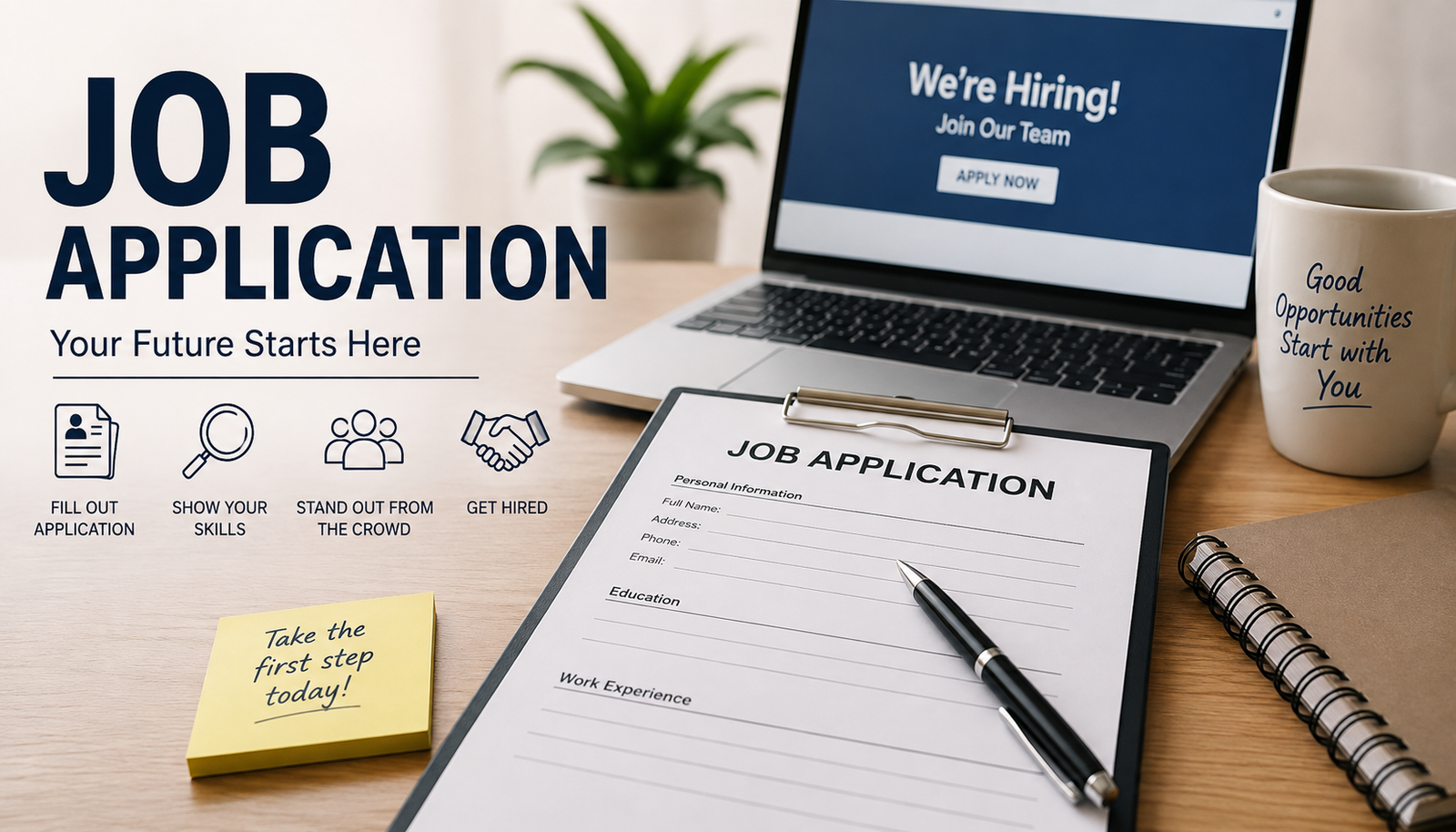
Finding the right job starts with submitting a strong job application. Whether you are a student, a fresh graduate, or an experienced professional looking for a better opportunity, your application is often the first impression an employer has of you. A well-prepared application can significantly increase your chances of getting shortlisted for an interview, while a poorly written one may be rejected within seconds.
Today, employers use online hiring systems, Applicant Tracking Systems (ATS), and AI-powered recruitment tools to screen candidates before a recruiter even reads an application. This means your resume, job application letter, and application form must be accurate, professional, and tailored to the position you are applying for.
This complete guide explains everything you need to know about creating a successful job application, including the required documents, application process, ATS optimization, common mistakes to avoid, and expert tips that can help you stand out from other applicants.
What Is a Job Application?
A job application is a formal request submitted to an employer expressing your interest in a vacant position. It includes important details about your education, work experience, skills, qualifications, and contact information. Employers use this information to determine whether you meet the requirements for the role.
A job application can be submitted in several ways. Most companies now accept online applications through their websites or recruitment platforms, while some organizations still require paper applications or email submissions.
Completing a job application carefully shows professionalism and demonstrates that you can follow instructions and pay attention to detail.
Why Employers Require Job Applications
Employers receive hundreds of applications for a single vacancy. A standardized application helps recruiters compare candidates fairly and efficiently. It also provides consistent information that supports hiring decisions and legal compliance.
Additionally, application forms allow employers to verify qualifications, employment history, and references before scheduling interviews.
Types of Job Applications
Understanding the different types of applications helps you prepare the right documents for each opportunity.
Online Job Applications
The majority of employers now use online recruitment systems. Applicants create accounts, upload resumes, complete application forms, and submit supporting documents digitally.
Company Career Portals
Many organizations advertise vacancies exclusively on their own websites. Applying directly through a company’s career portal often increases credibility because applications go directly into the employer’s recruitment system.
LinkedIn Easy Apply
LinkedIn has simplified the application process by allowing candidates to apply using their profile and uploaded resume. While convenient, applicants should still customize their resume for each position.
Email Applications
Some employers request applications via email. In these cases, a professional email subject line, properly written job application letter, and correctly attached documents are essential.
Paper Job Applications
Although less common today, retail stores, restaurants, and local businesses may still ask candidates to complete printed application forms.
Government Job Applications
Public sector positions often require detailed application forms, supporting documents, and strict compliance with submission guidelines. If you are searching for Government Jobs in Pakistan Today Online apply, always review the eligibility criteria carefully before submitting your application.
Documents You Need Before Applying
Preparing your documents in advance makes the application process smoother and reduces the chance of missing important information.
| Document | Purpose | Required |
| Resume | Summarizes qualifications and experience | Yes |
| Job Application Letter | Introduces your interest in the role | Often |
| Educational Certificates | Verify qualifications | Sometimes |
| Professional Certifications | Demonstrate specialized skills | Optional |
| Portfolio | Showcases work samples | Industry-specific |
| References | Confirm work history and character | Sometimes |
| LinkedIn Profile | Supports your professional presence | Recommended |
Before applying, ensure every document is updated and tailored to the position.
Step-by-Step Job Application Process
Following a structured approach improves your chances of success.
Read the Job Description Carefully
Start by reading the entire job advertisement. Pay close attention to the required qualifications, experience, technical skills, and responsibilities.
Highlight keywords that appear repeatedly because these are often used by ATS software when screening applications.
Research the Company
Understanding the employer helps you customize your application. Visit the company’s website, learn about its mission, products, services, and culture, and identify how your skills align with its goals.
Recruiters appreciate applicants who demonstrate genuine interest in the organization.
Tailor Your Resume
Avoid sending the same resume to every employer. Customize your resume by emphasizing the experience and skills that match the specific job description.
For example, if you’re applying for a marketing position, highlight campaign management, SEO, analytics, and communication achievements instead of unrelated responsibilities.
Write a Professional Job Application Letter
Your job application letter should briefly introduce yourself, explain why you’re interested in the position, and describe how your qualifications match the employer’s needs.
Keep it concise, professional, and personalized for each application.
Complete the Application Form Carefully
Fill out every section accurately. Avoid leaving fields blank unless they are optional.
Double-check your contact information, employment history, and educational details before proceeding.
Upload Supporting Documents
Ensure every uploaded document uses a professional file name such as:
- John-Smith-Resume.pdf
- John-Smith-Cover-Letter.pdf
Avoid vague names like Resume1.pdf or FinalResumeLatest.pdf.
Proofread Everything
Grammar mistakes, spelling errors, and inconsistent formatting create a poor first impression.
Read your application carefully or ask someone else to review it before submission.
Submit Your Application
After reviewing everything, submit the application confidently and save confirmation emails or reference numbers for future communication.
Resume vs Job Application Letter vs Job Application
Understanding the difference between these documents helps applicants prepare complete and professional submissions.
| Feature | Resume | Job Application Letter | Job Application |
| Purpose | Summarizes qualifications | Explains interest in the position | Official request for employment |
| Length | 1–2 pages | One page | Varies by employer |
| Personalization | Recommended | Essential | Required |
| Submitted With | Every application | Often requested | Always required |
| Reviewed By | Recruiters and hiring managers | Hiring managers | HR and ATS systems |
Each document plays a different role, and together they present a complete picture of your qualifications.
How Applicant Tracking Systems (ATS) Work
Many employers use Applicant Tracking Systems to organize and screen applications before recruiters review them.
ATS software scans resumes and applications for relevant keywords, qualifications, job titles, and skills. Applications that closely match the job description are more likely to reach a hiring manager.
To improve ATS compatibility:
- Use standard section headings.
- Include keywords naturally.
- Avoid excessive graphics or tables in your resume.
- Submit documents in the requested format.
- Match your experience with the advertised requirements.
For example, if the job description mentions “Project Management,” include that exact phrase if it accurately reflects your experience instead of using a less common alternative.
How to Tailor Every Job Application
Every employer is looking for a candidate who understands the role and can contribute immediately.
Start by identifying the employer’s priorities in the job description. Then adjust your resume summary, work experience, and skills section to reflect those requirements.
Instead of writing:
“Responsible for managing projects.”
Write:
“Managed 15 cross-functional projects that improved team productivity by 25% and consistently met client deadlines.”
Specific achievements are far more persuasive than generic descriptions.
Likewise, if you’re preparing a Job application for teaching, highlight classroom management, lesson planning, curriculum development, student engagement, and measurable educational achievements rather than unrelated work experience.
In the next part, we’ll cover expert recruiter tips, online application best practices, common mistakes to avoid, AI in job applications, a complete submission checklist, FAQs, the conclusion, and SEO metadata.
Best Job Application Tips from Hiring Experts
Recruiters often review dozens—or even hundreds—of applications for a single vacancy. Making your application clear, relevant, and professional can significantly improve your chances of being shortlisted.
Apply Early
Many employers begin reviewing applications before the deadline. Applying within the first few days can increase your visibility.
Customize Every Application
Avoid sending the same resume and job application letter to every employer. Tailor your documents to the specific role by matching your skills and achievements with the job description.
Quantify Your Achievements
Instead of saying:
- Increased sales.
Write:
- Increased monthly sales by 30% within six months.
Numbers make your accomplishments more credible and measurable.
Use a Professional Email Address
Choose an email address that includes your name rather than nicknames or informal words. A professional email creates a positive first impression.
Keep Your Resume Updated
Before applying, ensure your latest experience, certifications, and skills are included. An outdated resume can reduce your chances of being selected.
Common Job Application Mistakes to Avoid
Many qualified candidates lose opportunities because of simple mistakes that can easily be prevented.
| Mistake | Why It Hurts | Better Approach |
| Sending the same resume everywhere | Doesn’t match employer needs | Customize each resume |
| Grammar and spelling errors | Looks unprofessional | Proofread carefully |
| Incorrect contact information | Employers cannot reach you | Verify phone number and email |
| Missing attachments | Application appears incomplete | Check documents before submitting |
| Ignoring instructions | Shows poor attention to detail | Follow every application requirement |
| Keyword stuffing | Can appear unnatural | Use relevant keywords naturally |
| Applying without research | Demonstrates low interest | Learn about the company first |
Avoiding these common mistakes immediately improves the quality of your application.
Online Job Application Best Practices
Most employers now hire through online recruitment systems, making digital applications more important than ever.
Applying Through LinkedIn
Complete your LinkedIn profile with a professional photo, updated experience, relevant skills, and recommendations. Keep your profile consistent with your resume.
Applying Through Company Websites
Whenever possible, apply directly through the employer’s official careers page. This ensures your application reaches the company’s recruitment system.
Mobile Applications
Many candidates now apply using smartphones. Before submitting, preview your application on a desktop or laptop if possible to ensure formatting remains correct.
Email Applications
If applying by email:
- Use a clear subject line.
- Attach documents in PDF format unless instructed otherwise.
- Include a short, professional message introducing yourself.
- Double-check all attachments before sending.
Using AI Responsibly in Job Applications
Artificial intelligence has become a valuable tool for job seekers. It can help improve grammar, organize content, and suggest stronger wording.
However, your application should still reflect your own experience and achievements.
Good uses of AI include:
- Improving sentence structure.
- Correcting grammar.
- Creating a clearer resume layout.
- Brainstorming ideas for a cover letter.
Avoid using AI to invent qualifications, exaggerate achievements, or copy generic content. Recruiters value authenticity and can often recognize applications that sound overly robotic.
Job Application Checklist Before You Submit
Use this checklist before clicking the submit button.
| Task | Status |
| Resume updated | ✔ |
| Job application letter customized | ✔ |
| Contact details verified | ✔ |
| Grammar checked | ✔ |
| Documents attached | ✔ |
| Keywords included naturally | ✔ |
| Company researched | ✔ |
| Application reviewed one final time | ✔ |
Taking a few extra minutes to review everything can prevent costly mistakes.
Real-Life Example
Imagine Sarah is applying for a teaching position.
Instead of sending the same resume she used for administrative jobs, she prepares a Job application for teaching by emphasizing her classroom management, lesson planning, communication skills, and student success stories. She also writes a personalized job application letter explaining why she wants to join the school and how her experience aligns with its educational goals.
She carefully reviews the job description, includes relevant keywords, uploads all required documents, and submits her application before the deadline.
Because her application is tailored to the role, it stands out from generic submissions and increases her chances of receiving an interview invitation.
Job Opportunities in Pakistan
Job seekers looking for Jobs in Pakistan today online apply should regularly visit trusted company career pages, government recruitment portals, and reputable job boards. Always verify that vacancies are legitimate before submitting personal information.
Those interested in Government Jobs in Pakistan Today Online apply should carefully read eligibility criteria, required documents, and application deadlines. Government recruitment processes often require additional forms and supporting documentation, so following instructions precisely is essential.
If you are searching for Urgent jobs in Karachi, focus on recently posted vacancies and prepare your documents in advance so you can apply quickly. Some employers also advertise Urgent jobs in Karachi with contact number, allowing applicants to contact hiring managers directly. Even in these situations, maintain professionalism and avoid sharing sensitive information until you have verified the employer’s authenticity.
For candidates who prefer local language resources, many organizations also provide guidance on Job application in urdu, making the application process easier to understand for Urdu-speaking applicants.
Regardless of where you apply, using the correct Job application format and submitting accurate, well-organized documents will improve your chances of success.
Conclusion
A strong job application is much more than completing an online form. It is your opportunity to demonstrate your qualifications, professionalism, and suitability for a role before meeting an employer. By understanding the job requirements, tailoring your resume and job application letter, optimizing for Applicant Tracking Systems, avoiding common mistakes, and following a structured application process, you can greatly improve your chances of securing interviews.
Whether you are applying for a teaching position, searching for opportunities in Pakistan, or pursuing your next career move, investing time in preparing a high-quality application is one of the most effective steps toward achieving your career goals. Stay organized, keep your documents updated, and approach every application with care and confidence.
Frequently Asked Questions
1. What is a job application?
A job application is a formal request submitted to an employer that provides information about your qualifications, work experience, education, and skills for a specific position.
2. What documents are usually required for a job application?
Most employers request a resume, a job application letter, educational certificates, references, and any additional documents relevant to the position.
3. How can I make my application ATS-friendly?
Use relevant keywords from the job description, maintain a simple format, include standard section headings, and avoid excessive graphics or unusual fonts.
4. Should I customize every job application?
Yes. Tailoring your resume and cover letter to each position significantly increases your chances of being shortlisted because it demonstrates that your skills match the employer’s requirements.
5. What is the best job application format?
A professional Job application format includes accurate personal information, a customized resume, a concise cover letter, relevant supporting documents, and a careful review before submission.
6. Can AI help me write a job application?
Yes. AI can assist with grammar, formatting, and content improvement, but your application should always represent your real skills, experience, and achievements.
You May Also Read: grow a garden