


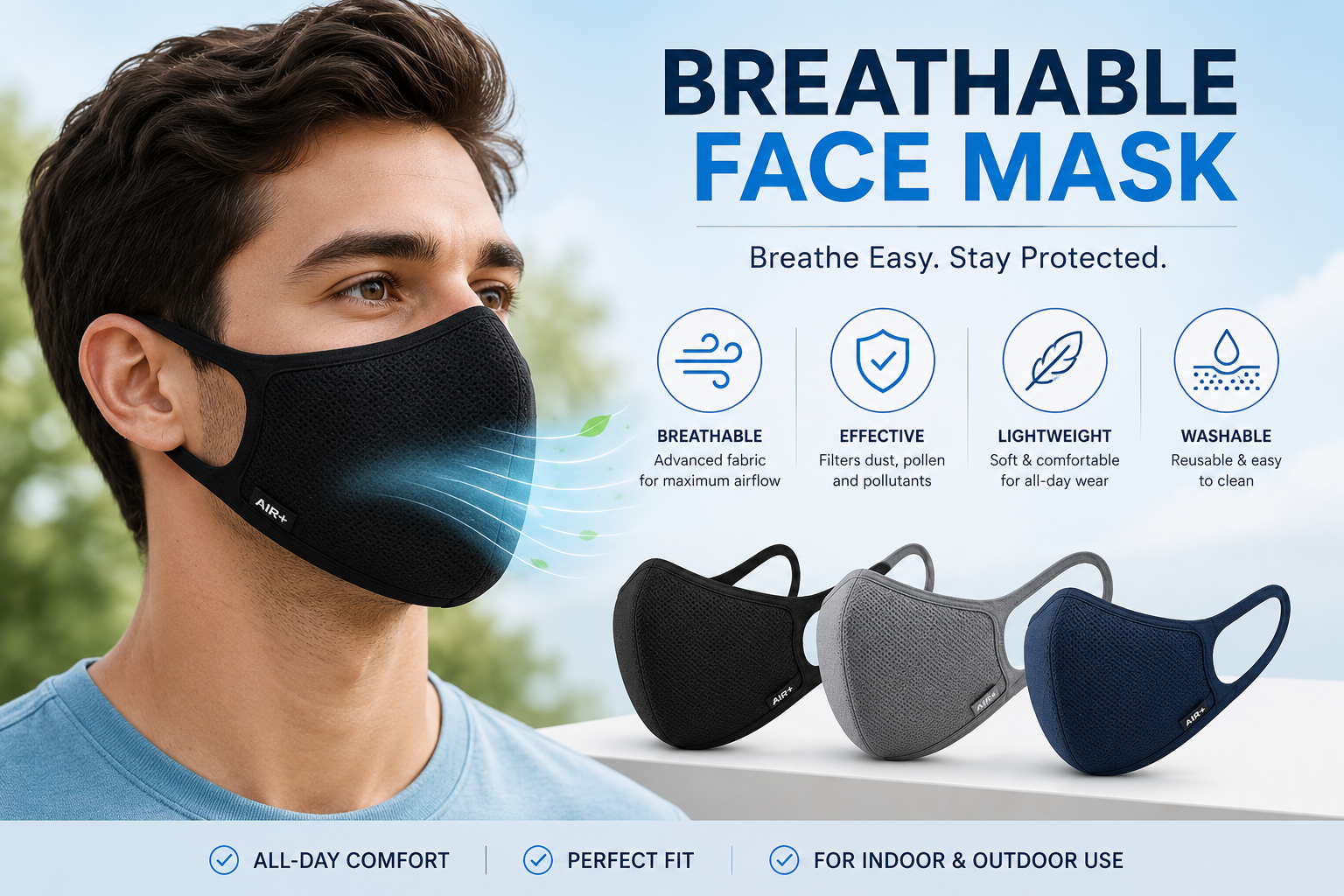
Wearing a breathable face mask can make a significant difference in your daily comfort, whether you’re commuting, exercising, traveling, or working long shifts. While protection is always a priority, a mask that traps heat, causes excessive sweating, or makes breathing difficult is less likely to be worn consistently. That’s why choosing the right combination of breathability, fit, and filtration is essential.
Today’s face masks are available in a wide variety of materials, styles, and protection levels. From lightweight cloth masks to breathable face mask N95 options designed for higher filtration, there is a solution for nearly every situation. The key is understanding how different materials and designs affect airflow without compromising effectiveness.
This guide explains everything you need to know about breathable face masks, including how they work, the best materials, the different mask types available, and how to choose the right one for your needs. You’ll also learn practical tips for staying comfortable in hot weather, during workouts, or throughout a full workday.
What Is a Breathable Face Mask?
A breathable face mask is designed to allow comfortable airflow while still providing an appropriate level of protection for its intended use. Breathability refers to how easily air passes through the mask material without creating excessive resistance during inhalation and exhalation.
A well-designed mask should help reduce heat buildup, minimize moisture accumulation, and remain comfortable even after several hours of wear. Breathability does not mean the fabric should be thin or loosely woven. Instead, it means the mask uses materials and construction techniques that balance airflow with effective filtration.
Why Breathability Matters
Many people wear face masks for extended periods, making comfort an important factor. A breathable mask offers several benefits:
- Reduces heat buildup around the nose and mouth.
- Minimizes sweating during warm weather.
- Makes speaking easier.
- Improves comfort during long work shifts.
- Encourages consistent mask use.
- Reduces skin irritation caused by trapped moisture.
For example, an office employee who wears a mask for eight hours has different needs than a runner exercising outdoors. Choosing the right breathable mask for the activity can significantly improve comfort.
How Face Masks Balance Breathability and Protection
One of the biggest misconceptions is that the easiest mask to breathe through is automatically the best choice. In reality, mask performance depends on balancing airflow with filtration.
A mask with extremely high airflow but poor filtration may not provide adequate protection. On the other hand, a mask with multiple dense layers may offer excellent filtration but become uncomfortable if worn for long periods.
Manufacturers achieve this balance by combining several factors:
Material Quality
High-quality fabrics allow better airflow while maintaining structural integrity. Advanced synthetic materials often provide moisture-wicking properties that keep the inside of the mask dry.
Layer Construction
Most quality reusable masks use two or three layers of carefully selected fabrics. Each layer performs a specific function, such as filtration, moisture control, or comfort against the skin.
Proper Fit
Even the most breathable mask becomes less effective if air escapes through large gaps around the nose or cheeks. A snug but comfortable fit helps direct airflow through the filtering material instead of around it.
Moisture Management
Breathing naturally creates humidity inside the mask. Moisture-wicking fabrics help move sweat and condensation away from the face, improving long-term comfort.
Best Breathable Face Mask Materials Compared
The material used in a face mask greatly influences its comfort, durability, and performance. Each fabric has strengths and limitations depending on how and where the mask will be used.
| Material | Breathability | Comfort | Moisture Control | Durability | Best For |
| Cotton | High | Excellent | Moderate | High | Daily wear |
| Polyester | High | Very Good | Excellent | Excellent | Sports and outdoor use |
| Bamboo Fabric | High | Excellent | Good | Good | Sensitive skin |
| Silk | Moderate | Excellent | Good | Moderate | Lightweight casual wear |
| Polypropylene | Moderate | Good | Good | High | Filter layers |
| Microfiber | High | Very Good | Excellent | High | Fitness activities |
| Performance Sports Fabric | Excellent | Excellent | Excellent | Excellent | Running and gym workouts |
Cotton
Cotton remains one of the most popular materials because it is soft, breathable, and gentle on the skin. High-quality cotton masks are suitable for everyday activities such as shopping, commuting, and office work.
However, cotton tends to absorb moisture, making it less ideal for intense physical activity unless combined with moisture-wicking layers.
Polyester
Polyester has become increasingly popular in athletic masks due to its lightweight nature and excellent moisture management. It dries quickly and helps reduce the feeling of dampness during exercise.
Many of the best breathable face mask options designed for runners and cyclists use advanced polyester blends.
Bamboo Fabric
Bamboo-derived fabrics offer exceptional softness and natural moisture absorption. They are often recommended for people with sensitive skin because they reduce friction and irritation.
Bamboo masks are also appreciated for their lightweight feel during extended wear.
Performance Sports Fabrics
Modern athletic masks frequently combine polyester, elastane, and technical mesh panels to maximize airflow. These fabrics are specifically engineered to maintain comfort during high-intensity activities while managing heat and sweat effectively.
These masks are particularly useful for outdoor workouts, cycling, hiking, and other physically demanding activities.
Types of Breathable Face Masks
Choosing the right mask depends on where and how you plan to wear it. Each type offers a different balance of breathability, comfort, and filtration.
Cloth Face Masks
Cloth masks are reusable, washable, and available in various fabrics and designs. Premium cloth masks made from cotton, bamboo, or moisture-wicking polyester blends provide excellent comfort for everyday activities such as shopping, commuting, and office work.
Look for masks with adjustable ear loops and a nose wire for a better fit and reduced air leakage.
Surgical Masks
Disposable surgical masks are lightweight and easy to breathe through. Their three-layer construction provides good filtration while remaining comfortable for several hours of use.
These masks are commonly used in healthcare settings and are also suitable for travel and crowded indoor environments.
Breathable Face Mask N95
A breathable face mask N95 is designed to filter at least 95% of airborne particles when properly fitted. While it offers a higher level of protection than most cloth masks, newer N95 designs have improved airflow and comfort compared to earlier models.
These masks are often recommended in environments where a higher level of filtration is needed. Proper fit is essential to achieve their intended performance.
KN95 Masks
KN95 masks provide a similar level of filtration to N95 masks but follow a different certification standard. Many modern KN95 masks feature a 3D shape that creates additional breathing space in front of the mouth, making them feel more comfortable during extended wear.
Korean Face Masks (KF94)
The breathable face mask Korean style, commonly known as the KF94 mask, has become popular because of its ergonomic 3D design. The folded structure keeps the fabric away from the lips, improving airflow while maintaining a secure fit.
Many users prefer Korean masks for daily commuting, travel, and office use because they combine comfort with effective filtration.
Sports Face Masks
Sports masks are specifically designed for physical activity. They use lightweight performance fabrics that wick moisture away from the skin and allow greater airflow during exercise.
Features often include:
- Stretchable materials
- Adjustable straps
- Lightweight construction
- Quick-drying fabrics
- Enhanced ventilation
Comparison of Popular Face Mask Types
| Mask Type | Breathability | Protection | Reusable | Best For |
| Cloth Mask | High | Moderate | Yes | Daily use |
| Surgical Mask | Very High | Good | No | Healthcare, travel |
| KN95 | Good | High | Limited | Crowded indoor spaces |
| N95 | Good | Very High | Limited | High-risk environments |
| KF94 (Korean) | Very Good | High | Limited | Daily commuting, office |
| Sports Mask | Excellent | Moderate | Yes | Running, gym, cycling |
How to Choose the Best Breathable Face Mask
With so many options available, selecting the right mask requires more than simply choosing the lightest fabric. Consider these important factors before making a purchase.
Fabric Quality
Choose soft, durable materials that maintain their shape after repeated washing. High-quality fabrics also resist pilling and stretching, ensuring long-lasting comfort.
Number of Layers
A quality breathable mask usually features two or three layers that balance airflow with filtration. Avoid overly thin single-layer masks unless they are designed for very specific, low-risk activities.
Adjustable Nose Wire
A flexible nose bridge helps create a secure seal while reducing glasses fogging. It also improves overall comfort by preventing constant adjustments.
Comfortable Ear Loops
Soft, adjustable ear loops distribute pressure more evenly and reduce discomfort during long periods of wear.
Moisture-Wicking Technology
If you exercise or live in a warm climate, moisture-wicking materials can make a noticeable difference by keeping your face cooler and drier.
Washability
Reusable masks should withstand frequent washing without losing their shape or filtration performance. Always follow the manufacturer’s care instructions.
Best Breathable Face Masks for Different Situations
Different activities require different features. Matching the mask to your lifestyle improves both comfort and effectiveness.
For Running
Runners benefit from lightweight sports fabrics that wick away sweat while maintaining airflow. A snug fit prevents the mask from shifting during movement.
For Gym Workouts
Choose masks with stretchable materials and a structured design that keeps the fabric away from your mouth while breathing heavily.
For Cycling
Cyclists often prefer masks with aerodynamic shapes, adjustable nose bridges, and quick-drying fabrics to stay comfortable during long rides.
For Office Work
Office workers usually prioritize comfort over several hours. Soft cotton blends or KF94-style masks offer an excellent balance of breathability and professional appearance.
For Air Travel
Flights often involve wearing a mask for extended periods. A well-fitted surgical mask, KN95, or N95 can provide consistent comfort and reliable filtration throughout the journey.
For Hot Summer Weather
Lightweight fabrics with moisture-wicking technology help reduce heat buildup. Choosing lighter colors may also improve comfort when spending time outdoors.
For Sensitive Skin
People with sensitive skin should consider bamboo fabrics or premium cotton masks with smooth inner linings. These materials reduce friction and help minimize irritation.
Breathable Face Mask Pakistan: Buying Tips
Demand for quality face masks remains strong, and finding a reliable breathable face mask Pakistan is easier than ever. Many local pharmacies, medical suppliers, supermarkets, and online marketplaces offer reusable cloth masks, KF94 masks, KN95 masks, and N95 respirators.
When purchasing locally, consider the following:
- Buy from reputable brands or certified medical suppliers.
- Check customer reviews before ordering online.
- Verify the mask’s material and construction.
- Ensure the size fits your face properly.
- Avoid counterfeit products claiming unrealistic filtration performance.
Breathable Face Mask Price in Pakistan
The breathable face mask price in Pakistan varies depending on the type, material, and brand.
Generally:
- Basic reusable cloth masks are the most affordable.
- Premium sports masks cost more because of advanced moisture-wicking fabrics.
- KF94 and KN95 masks are usually priced in the mid-range.
- Certified N95 respirators are often the most expensive due to their higher filtration standards.
Instead of focusing only on price, consider durability, comfort, and intended use to get the best overall value.
Common Problems and Simple Solutions
Even a high-quality mask can become uncomfortable if it isn’t used correctly.
Problem: Glasses keep fogging up.
Solution: Use a mask with an adjustable nose wire and ensure it fits snugly across the bridge of your nose.
Problem: The mask feels too hot.
Solution: Choose moisture-wicking fabrics or a structured 3D design that improves airflow.
Problem: Ear pain after several hours.
Solution: Look for adjustable, soft elastic ear loops or use an ear saver to reduce pressure.
Problem: Skin irritation or acne.
Solution: Wash reusable masks regularly and select soft, breathable materials such as cotton or bamboo.
Problem: Difficulty breathing during exercise.
Solution: Switch to a sports-specific breathable mask designed for high-intensity activities.
How to Properly Wear a Breathable Face Mask
Even the best breathable face mask won’t perform well if it isn’t worn correctly. A proper fit improves both comfort and effectiveness while reducing the need for constant adjustments.
Follow these simple steps:
- Wash or sanitize your hands before putting on the mask.
- Cover both your nose and mouth completely.
- Adjust the nose wire to reduce gaps.
- Ensure the mask fits snugly against your cheeks and chin.
- Avoid touching the front of the mask while wearing it.
- Replace or wash the mask if it becomes damp or dirty.
A well-fitted mask should feel secure without causing pressure or discomfort.
Cleaning and Maintaining Reusable Face Masks
Proper care extends the life of your reusable mask and helps maintain hygiene.
Wash After Every Use
Reusable cloth masks should be washed after each day of use or immediately if they become damp from sweat or prolonged wear.
Use Mild Detergent
Wash your mask with a gentle detergent in warm water. Avoid harsh chemicals or bleach unless the manufacturer specifically recommends them.
Dry Completely
Allow the mask to air dry completely or use a dryer if the care label permits. Wearing a damp mask can reduce comfort and encourage bacterial growth.
Store Properly
Keep clean masks in a dry, breathable pouch or container. Avoid placing them loosely in pockets or bags where they may collect dirt.
Replace When Necessary
Replace reusable masks if you notice:
- Torn fabric
- Loose ear loops
- Permanent stains
- Loss of shape
- Reduced fit
Disposable masks, including many breathable face mask N95 models, should be replaced according to the manufacturer’s instructions or when they become damaged or difficult to breathe through.
Common Mistakes to Avoid
Many people unknowingly reduce the effectiveness and comfort of their masks. Avoid these common mistakes:
- Choosing a mask based only on appearance.
- Wearing the wrong size.
- Ignoring adjustable features.
- Reusing disposable masks beyond their intended lifespan.
- Wearing a wet or dirty mask.
- Leaving the nose uncovered.
- Buying low-quality products from unreliable sellers.
- Assuming thinner fabric always means better breathability.
A quality mask should balance airflow, comfort, durability, and appropriate filtration for its intended use.
Expert Tips for Choosing the Right Mask
If you’re shopping for a new mask, keep these practical recommendations in mind:
- Match the mask to your daily activities.
- Prioritize fit before style.
- Choose moisture-wicking fabrics for exercise.
- Select soft inner linings if you have sensitive skin.
- Look for adjustable ear loops and nose wires.
- Read independent customer reviews before purchasing.
- Replace worn-out masks promptly.
For people who spend several hours wearing a mask each day, investing in a higher-quality option often improves comfort and long-term value.
Final Thoughts
A breathable face mask should do more than simply feel comfortable—it should also fit well, support your daily activities, and provide an appropriate level of protection for its intended use. Whether you need a lightweight cloth mask for everyday errands, a sports mask for exercise, a breathable face mask Korean style for commuting, or a breathable face mask N95 for situations requiring higher filtration, choosing the right design makes a noticeable difference.
When comparing options, consider material quality, moisture management, fit, durability, and ease of maintenance rather than price alone. If you’re shopping for a breathable face mask Pakistan, purchase from trusted retailers or certified medical suppliers and verify product quality before buying.
By understanding how different materials and mask types perform, you can confidently choose a mask that keeps you comfortable throughout the day while meeting your personal needs.
Frequently Asked Questions
1. What is the best breathable face mask?
The best breathable face mask depends on your intended use. Cotton and bamboo masks are excellent for everyday wear, sports masks are ideal for exercise, while N95 or KF94 masks are suitable when higher filtration is required.
2. Are breathable face masks still protective?
Yes. A breathable mask can provide effective protection when it is made from quality materials, fits properly, and is used as intended. Breathability should be balanced with adequate filtration and a secure fit.
3. Which material is most comfortable in hot weather?
Lightweight cotton, bamboo fabric, and moisture-wicking polyester blends are among the most comfortable choices for warm climates because they help reduce heat and manage moisture.
4. What is the breathable face mask price in Pakistan?
The breathable face mask price in Pakistan varies depending on the material, brand, and certification. Basic reusable cloth masks are generally the most affordable, while certified KN95 and N95 masks typically cost more.
5. Are Korean face masks good?
Yes. Breathable face mask Korean (KF94) designs are popular because their three-dimensional shape improves comfort, creates extra breathing space, and provides a secure fit for many users.
6. How often should reusable face masks be washed?
Reusable cloth masks should be washed after each full day of use or whenever they become damp, dirty, or exposed to sweat.
7. Can I exercise while wearing a breathable face mask?
Yes. Sports-specific breathable masks made from lightweight, moisture-wicking fabrics are designed to improve comfort during running, cycling, gym workouts, and other physical activities.
You May Also Read: tropical smoothie cafe