


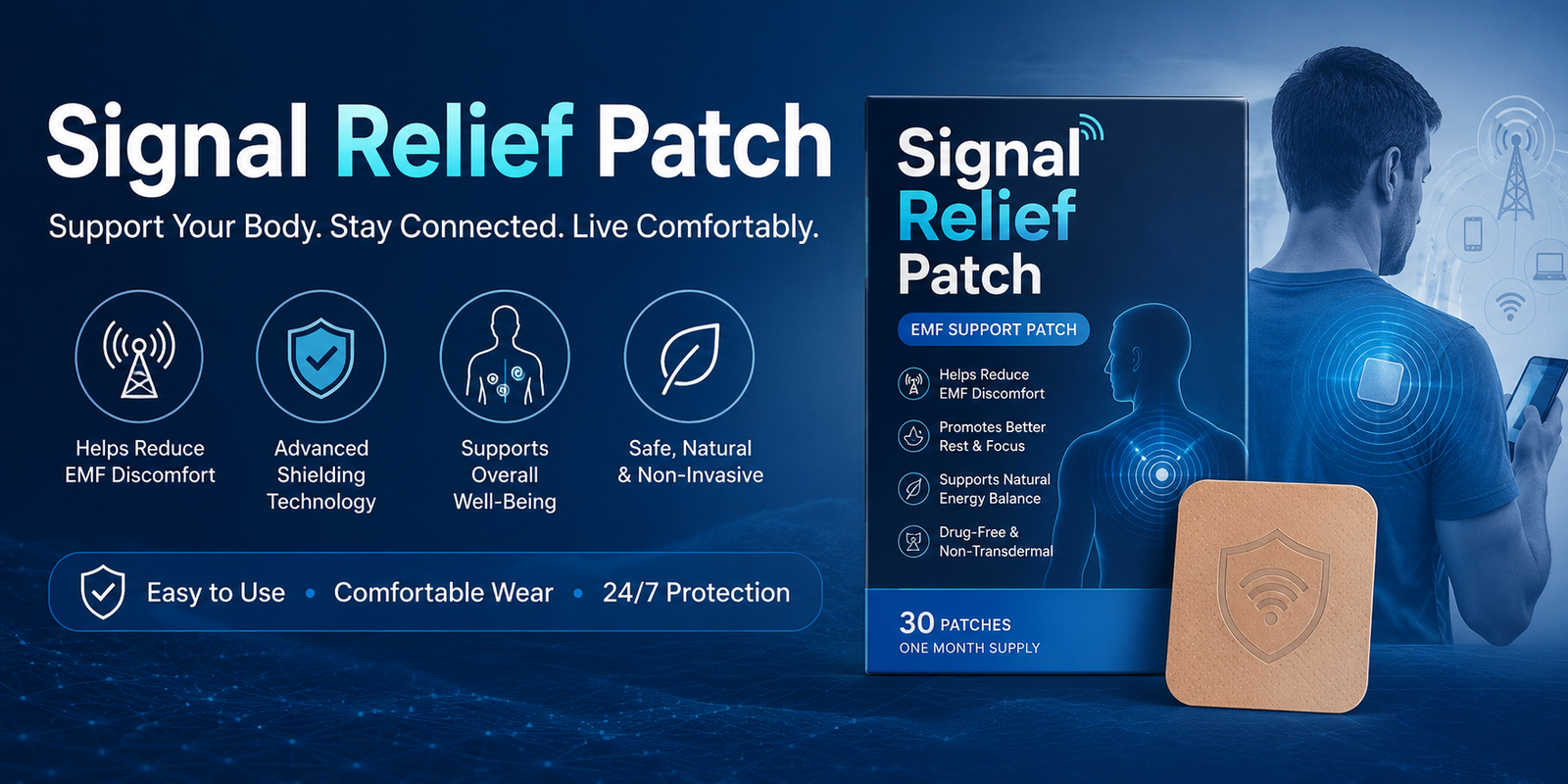
Chronic pain affects millions of people worldwide, making everyday activities like walking, working, or even sleeping more difficult. While medications can provide relief, many people are searching for drug-free alternatives that don’t involve pills, injections, or surgery. One product that has gained attention is the Signal Relief Patch, a reusable wearable patch designed to help reduce pain without medication.
From athletes recovering after workouts to office workers dealing with neck stiffness and seniors managing arthritis, many users are curious whether this patch actually works or if it’s simply another wellness trend. Questions like “Is Signal Relief Patch a hoax?”, “Does it really relieve pain?”, and “Is it safe?” are among the most searched online.
This guide explains how the Signal Relief Patch is claimed to work, what current research says, its potential benefits, and how it compares with other pain relief options. You’ll also learn who may benefit from using it, what limitations to consider, and how to make an informed decision based on available evidence rather than marketing claims.
What Is a Signal Relief Patch?
A Signal Relief Patch is a reusable, drug-free wearable patch designed to help manage pain by interacting with the body’s natural electrical signals. Unlike medicated patches that deliver ingredients through the skin, this patch contains no drugs, chemicals, or batteries.
Instead, the manufacturer claims the patch reflects the body’s electrical signals back into the affected area, potentially reducing discomfort. While this proposed mechanism has attracted interest, independent scientific evidence supporting these claims remains limited.
One of the biggest advantages of the patch is that it is lightweight, reusable, and portable. Users simply place it over or near the painful area and continue with their normal daily activities.
Common Conditions People Use It For
Many users report wearing the patch for a variety of conditions, including:
- Chronic back pain
- Neck pain
- Shoulder discomfort
- Knee pain
- Arthritis
- Joint stiffness
- Muscle soreness
- Sciatica
- Plantar fasciitis
- Tennis elbow
- Fibromyalgia
It’s important to remember that individual results vary, and the patch is not intended to diagnose, treat, cure, or prevent any disease.
How Does the Signal Relief Patch Work?
The Signal Relief Patch is based on the concept of bioelectrical communication within the body. Every movement, sensation, and pain signal involves tiny electrical impulses traveling through nerves to the brain.
According to the manufacturer, the patch uses a patented material that reflects these naturally occurring electrical signals back toward the source of pain. The idea is that this reflection may influence how pain signals are perceived.
However, while this explanation is part of the product’s marketing, researchers have not yet reached a consensus on whether this mechanism consistently produces measurable pain relief across different populations. More large-scale clinical studies are needed to confirm its effectiveness.
Understanding Pain Signals
Pain begins when specialized nerve endings detect injury or irritation. These nerves send electrical signals through the spinal cord to the brain, where they are interpreted as pain.
Traditional pain treatments interrupt this process in different ways:
- Pain medications reduce inflammation or alter pain perception.
- TENS units deliver electrical stimulation through electrodes.
- Heat patches improve blood flow and relax muscles.
- Cold therapy helps reduce swelling.
The Signal Relief Patch claims to work differently by interacting with the body’s existing electrical activity rather than introducing medication or electrical currents.
What Does Current Scientific Evidence Say?
One of the most important questions consumers ask is whether scientific research supports the effectiveness of the Signal Relief Patch.
At present, available evidence is limited. Some users report noticeable improvements, while independent reviewers note that there are relatively few high-quality clinical studies specifically evaluating the product.
Researchers generally agree on several points:
- More independent research is needed.
- Existing studies are relatively small.
- Individual responses appear to vary.
- Personal testimonials should not replace scientific evidence.
This doesn’t necessarily mean the patch cannot help some individuals. Instead, it highlights the importance of setting realistic expectations and recognizing that pain management often involves a combination of approaches.
Clinical Evidence vs. Personal Experience
When evaluating any pain relief product, it’s useful to distinguish between different types of evidence.
Clinical studies involve controlled testing designed to measure effectiveness objectively.
Personal testimonials describe individual experiences but may be influenced by many factors, including expectations, lifestyle changes, or the natural course of recovery.
The strongest recommendations usually come from multiple well-designed clinical trials, which are still limited for this type of technology.
Potential Benefits of the Signal Relief Patch
Although research continues, many users appreciate several practical advantages of the Signal Relief Patch.
Drug-Free Pain Relief
Because the patch contains no medication, users avoid concerns about drug interactions or medication-related side effects.
Reusable Design
Unlike disposable pain patches, the Signal Relief Patch is designed for repeated use, making it a potentially economical long-term option.
Portable and Lightweight
The patch fits easily into a pocket or bag and can be worn throughout daily activities without drawing attention.
No Batteries or Charging
Unlike electronic pain relief devices, the patch requires no charging, batteries, or maintenance beyond keeping it clean.
Non-Invasive
There are no needles, injections, or complicated procedures involved. Application takes only a few seconds.
Who May Benefit Most?
While results vary, certain groups are more likely to consider this type of product as part of a broader pain management plan.
Office Workers
Long hours at a desk often contribute to neck tension, shoulder pain, and lower back discomfort. A wearable patch may provide convenient support during the workday.
Seniors
Older adults experiencing joint stiffness or arthritis may prefer drug-free approaches that avoid adding more medications to their routine.
Athletes
Sports enthusiasts frequently look for recovery tools that support muscle soreness without relying solely on painkillers.
Travelers
Long flights or road trips can trigger muscle stiffness and back pain. Because the patch is lightweight and reusable, it’s easy to carry while traveling.
Physically Active Professionals
Construction workers, warehouse employees, healthcare workers, and others with physically demanding jobs may appreciate a portable pain management option.
Signal Relief Patch vs. Other Pain Relief Options
Choosing the right pain management solution depends on your needs, budget, and medical history. Here’s how the Signal Relief Patch compares with several common alternatives.
| Feature | Signal Relief Patch | TENS Unit | Lidocaine Patch | Heat Patch | Pain Medication |
| Drug-Free | ✔ | ✔ | ✖ | ✔ | ✖ |
| Reusable | ✔ | ✔ | ✖ | ✖ | N/A |
| Batteries Required | ✖ | ✔ | ✖ | ✖ | N/A |
| Prescription Needed | ✖ | Usually No | Sometimes | No | Sometimes |
| Portable | ✔ | Moderate | ✔ | ✔ | ✔ |
| Continuous Wear | ✔ | Limited | Limited | Limited | N/A |
Each option has its own strengths. For example, TENS units have more clinical research supporting their use for certain pain conditions, while medicated patches deliver active ingredients directly through the skin. The Signal Relief Patch appeals primarily to users seeking a reusable, drug-free alternative.
Pros and Cons
Before purchasing any wellness product, it’s important to weigh both the potential advantages and limitations.
Pros
- Drug-free pain management
- Reusable design
- Lightweight and portable
- No batteries or charging required
- Easy to apply
- Suitable for daily use
- May reduce reliance on temporary pain medications for some users
Cons
- Scientific evidence remains limited
- Results vary significantly between individuals
- Proper placement is important
- Upfront cost is higher than disposable patches
- Not intended to replace medical treatment for serious or persistent pain
Understanding these pros and cons helps set realistic expectations. For some people, the Signal Relief Patch may become a useful addition to a broader pain management routine, while others may find greater benefit from physical therapy, exercise, medication, or other evidence-based treatments.
Is the Signal Relief Patch Safe?
One reason many people are interested in the Signal Relief Patch is that it contains no medication. Since it doesn’t deliver drugs through the skin, it generally avoids the medication-related side effects associated with some pain relievers. However, “drug-free” doesn’t automatically mean it’s suitable for everyone.
Most users can wear the patch comfortably, but you should always follow the manufacturer’s instructions and stop using it if you experience discomfort or skin irritation.
Signal Relief Patch Side Effects
Because the patch contains no active medication, reported Signal Relief patch side effects are generally uncommon. However, some users have mentioned:
- Mild skin irritation from adhesive tape
- Temporary redness after removal
- Discomfort if placed incorrectly
- No noticeable improvement in pain
If you have sensitive skin, allergies to adhesives, or an implanted medical device, consult your healthcare provider before trying any wearable pain-relief product.
Who Should Talk to a Doctor First?
Speak with a healthcare professional before using the patch if you:
- Are pregnant or breastfeeding
- Have unexplained or severe pain
- Have recently suffered a serious injury
- Have a pacemaker or another implanted electronic medical device
- Experience persistent pain that continues to worsen
Remember that the Signal Relief Patch is intended as a wellness product, not a replacement for professional medical diagnosis or treatment.
Signal Relief Patch Reviews and Complaints
Reading Signal Relief patch reviews and complaints can help you understand what real users have experienced. Reviews are mixed, with some customers reporting meaningful pain relief while others notice little or no difference.
Positive Reviews
Some users report benefits such as:
- Reduced joint discomfort
- Better mobility during daily activities
- Less reliance on temporary pain medication
- Comfortable all-day wear
- Easy application and reusable design
Many positive reviews come from individuals with chronic back pain, arthritis, and muscle soreness.
Common Complaints
Negative feedback usually focuses on:
- The patch didn’t work as expected.
- Pain relief took longer than anticipated.
- Results varied depending on placement.
- The purchase price seemed high.
- Limited scientific evidence supporting the product.
Because pain is highly personal, it’s normal for experiences to differ from one individual to another.
Signal Relief Patch Reviews Consumer Reports
Many people search for Signal Relief patch reviews Consumer Reports hoping to find an independent evaluation. While independent product-testing organizations and reviewers have discussed wearable pain patches, it’s important to distinguish between manufacturer testimonials and third-party assessments.
Independent reviewers generally emphasize that:
- More high-quality clinical studies are needed.
- Available evidence is limited.
- Consumers should be cautious of exaggerated marketing claims.
- Individual experiences should not be viewed as proof that the product will work for everyone.
Looking at multiple reliable sources rather than relying on a single review can help you make a more informed decision.
Is Signal Relief Patch a Hoax?
One of the most common questions online is, “Is Signal Relief Patch a hoax?”
The answer isn’t as simple as yes or no.
The product is a real, commercially available wearable patch used by many consumers. However, whether it works effectively for every person remains uncertain.
Some users report noticeable pain relief, while others experience little or no improvement. Current scientific evidence does not conclusively prove that the patch works for all types of pain.
Rather than calling it a hoax, it’s more accurate to say that the evidence is still evolving and individual results vary. Maintaining realistic expectations is important with any non-invasive pain management product.
Where to Buy Signal Relief Patch
If you decide to purchase one, choosing a trusted seller is important.
Where to Buy Signal Relief Patch
You can typically find the product through:
- The official Signal Relief website
- Authorized retailers
- Medical supply stores
- Selected online marketplaces
Buying from an authorized source may help ensure you receive a genuine product and any available warranty or return policy.
Amazon Signal Relief Patch
Many shoppers also search for the Amazon Signal Relief Patch because of the convenience of online shopping.
If purchasing through Amazon or another marketplace:
- Verify the seller’s reputation.
- Read recent customer reviews.
- Confirm the product is authentic.
- Review the return policy before ordering.
Taking these steps can reduce the risk of receiving counterfeit or outdated products.
Signal Relief Patch as Seen on TV
The Signal Relief Patch as seen on TV has attracted attention through television advertising and online marketing campaigns. These advertisements often highlight its reusable design, drug-free approach, and ease of use.
While advertising can introduce consumers to new products, purchasing decisions should always be based on balanced information, independent reviews, and discussions with healthcare professionals when appropriate.
Try Signal Relief Patch for Free
Some consumers search for opportunities to Try Signal Relief Patch for free before making a purchase.
Manufacturers occasionally offer:
- Money-back guarantees
- Trial promotions
- Limited-time discounts
- Satisfaction guarantees
Before ordering, carefully read the terms and conditions to understand any eligibility requirements, return deadlines, or shipping costs.
Tips for Managing Chronic Pain
Whether or not you decide to use a Signal Relief Patch, experts generally recommend combining multiple healthy habits for better long-term pain management.
Helpful strategies include:
- Staying physically active
- Maintaining good posture
- Stretching regularly
- Getting quality sleep
- Managing stress
- Maintaining a healthy weight
- Following a physical therapy program if recommended
- Seeking medical advice for persistent or worsening pain
Pain management is often most effective when lifestyle changes, medical guidance, and appropriate treatments work together.
Conclusion
The Signal Relief Patch has become a popular option for people seeking a reusable, drug-free approach to pain management. Its lightweight design, portability, and ease of use make it appealing for individuals dealing with back pain, arthritis, muscle soreness, and other chronic discomfort.
Although many users report positive experiences, current scientific evidence remains limited, and independent experts agree that more high-quality research is needed to confirm how well the technology works. For this reason, the patch should be viewed as one possible tool within a broader pain management plan rather than a guaranteed solution.
Before purchasing, compare your options, read independent reviews, and consult a healthcare professional if you have ongoing or severe pain. Making informed decisions based on balanced evidence is the best way to choose the treatment approach that fits your individual needs.
Frequently Asked Questions
1. Does the Signal Relief Patch really work?
Some users report meaningful pain relief, while others experience little change. Current scientific evidence is limited, so results may vary.
2. How long can I wear the patch?
Follow the manufacturer’s instructions regarding wear time and placement. Many users wear it during normal daily activities.
3. Does the patch contain medication?
No. The Signal Relief Patch is marketed as a drug-free product and does not contain active medicinal ingredients.
4. Can I use the patch with pain medication?
In many cases, people use wearable pain patches alongside other treatments. However, consult your healthcare provider if you’re managing a chronic condition or taking prescription medications.
5. Is the Signal Relief Patch reusable?
Yes. One of its main selling points is its reusable design, allowing repeated use with proper care.
6. Is the Signal Relief Patch worth buying?
If you’re looking for a reusable, drug-free option and understand that results vary, it may be worth considering. However, it’s important to have realistic expectations and recognize that it may not work for everyone.
You May Also Read: teddy swims lose control