


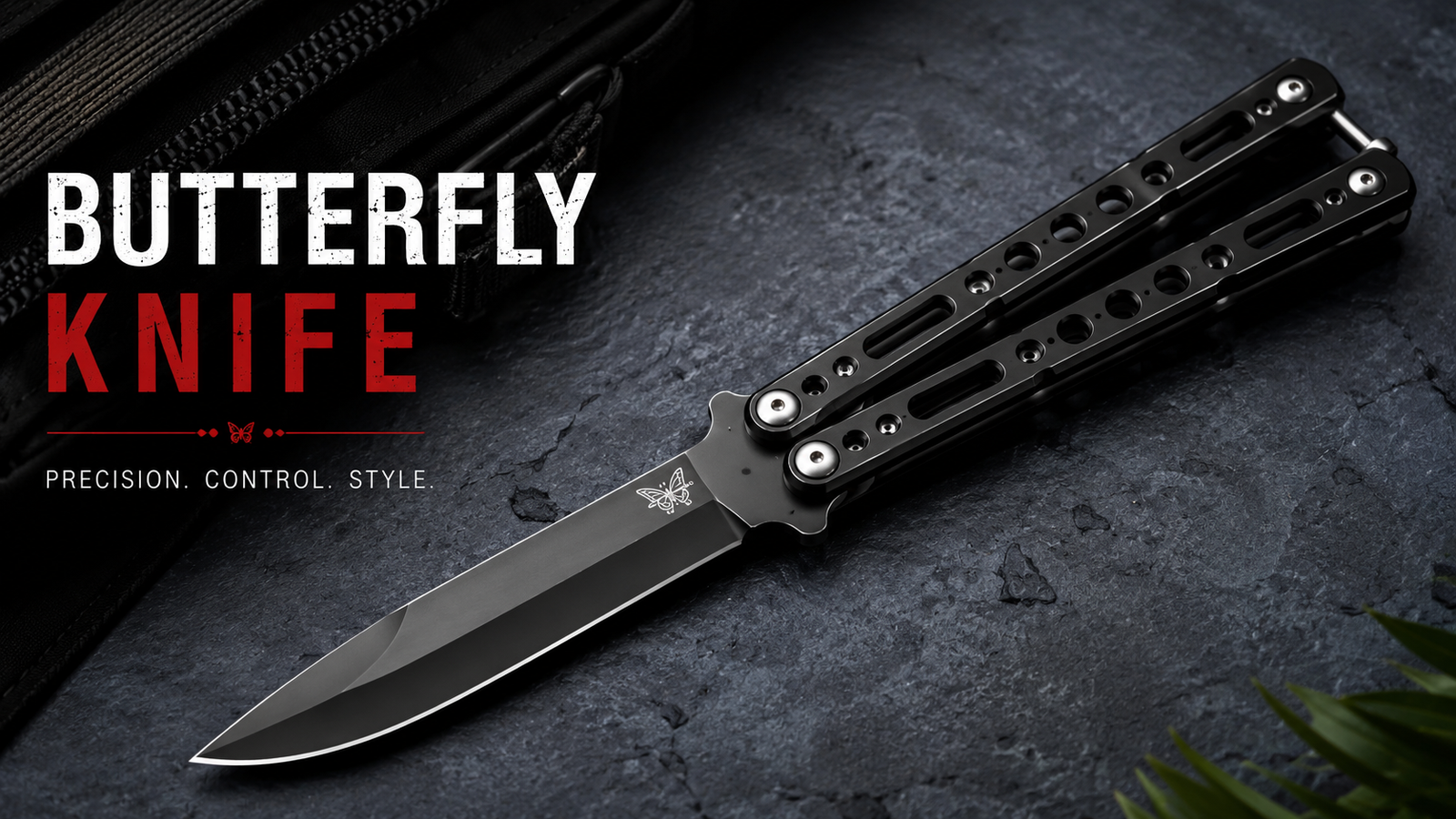
A butterfly knife, also known as a balisong, is one of the most recognizable folding knives in the world. Its unique dual-handle design allows the blade to rotate smoothly into the open or closed position, making it both functional and visually distinctive. Over the years, butterfly knifes have become popular among collectors, hobbyists, outdoor enthusiasts, and people interested in learning flipping techniques using safe practice tools.
Whether you’re curious about what is a butterfly knife used for, looking for a Butterfly knife Trainer, or simply want to understand the differences between modern balisongs, this guide covers everything you need to know. You’ll learn about their history, anatomy, types, materials, safety, maintenance, and how to choose the right model while keeping practical use and responsible ownership in mind.
What Is a Butterfly Knife?
A butterfly knife is a folding knife with two handles that rotate around the blade. When closed, the handles completely cover the blade. When opened, the handles lock together to form a secure grip.
The knife is commonly called a balisong, a name closely associated with its traditional roots in the Philippines. While many people recognize butterfly knives for their flipping motion, they are also valued for craftsmanship, mechanical design, and collecting.
Why Is It Called a Butterfly Knife?
The name comes from the way the two handles swing outward during opening, resembling the wings of a butterfly. This distinctive mechanism sets it apart from traditional folding knives that rely on a single pivot and locking system.
What Is a Butterfly Knife Used For?
The answer depends on the owner and local laws. Common uses include:
- Collecting unique knife designs
- Practicing flipping techniques with a trainer
- Learning knife mechanics
- Displaying craftsmanship
- General utility tasks where lawful and appropriate
Many beginners start with a Butterfly knife Trainer because it has a blunt blade designed specifically for safe practice.
The History of the Butterfly Knife
The butterfly knife has a fascinating history that combines tradition, craftsmanship, and modern innovation.
Philippine Origins
Most historians associate the balisong with the Philippines, particularly the Batangas region, where local craftsmen produced folding knives using traditional methods. These knives became known for their durable construction and practical design.
Although some historical details remain debated, the Philippine connection is widely recognized within the knife community.
From Traditional Tool to Modern Hobby
Over time, butterfly knives gained international attention. Improved manufacturing techniques introduced stronger materials, smoother pivots, and precision components, making modern balisongs more reliable than earlier designs.
Today, enthusiasts appreciate butterfly knives for engineering, collecting, and recreational flipping using trainers.
Popular Culture
Movies, video games, and online communities have helped increase interest in butterfly knives. Many enthusiasts also share educational content, reviews, and discussions on platforms such as the Butterfly knife blog reddit community, where beginners often exchange maintenance tips, trainer recommendations, and safe learning advice.
Butterfly Knife Anatomy
Understanding the parts of a butterfly knife helps you appreciate how it functions and makes it easier to choose the right model.
Blade
The blade performs the cutting function on live-blade models. Trainers replace the sharpened edge with a blunt practice blade.
Safe Handle
The safe handle is the side that does not contact the blade’s cutting edge when the knife is closed. Beginners should learn to identify this handle before practicing.
Bite Handle
The bite handle closes against the sharp edge. Accidentally gripping this handle during flipping with a live blade may result in injury.
Pivot Pins
These pins allow the handles to rotate smoothly around the blade.
Tang Pin
The tang pin helps control handle movement and alignment. Some owners occasionally search for information about Butterfly knife tang pin replacement, especially when restoring older knives or maintaining heavily used models. Replacement should follow the manufacturer’s recommendations to preserve safe operation.
Bushings, Bearings, and Washers
Modern butterfly knives may use bushings, bearings, or washers to improve handle movement.
- Bushings provide consistent performance and durability.
- Bearings create very smooth action.
- Washers offer a simpler and often more affordable design.
Butterfly Knife Parts Comparison
| Part | Purpose | Why It Matters |
| Blade | Cutting or practice | Main functional component |
| Safe Handle | Safe grip | Helps beginners avoid mistakes |
| Bite Handle | Covers blade edge | Important for safe handling |
| Tang Pin | Controls alignment | Maintains proper handle movement |
| Bushings | Precision rotation | Improves durability |
| Bearings | Smooth flipping | Fast, fluid action |
| Washers | Basic pivot support | Easy maintenance |
Types of Butterfly Knives
Different butterfly knives serve different purposes. Understanding these categories helps you select one that matches your experience level.
Butterfly Knife Trainer
A trainer looks similar to a standard butterfly knife but features a dull blade with openings or cutouts.
It allows beginners to practice handling techniques with significantly lower risk while developing confidence and coordination.
For most new users, a trainer is the recommended starting point.
Live Blade Butterfly Knife
A live blade model includes a sharpened edge intended for cutting tasks where lawful and appropriate.
These knives are generally better suited to experienced owners who understand proper handling and maintenance.
Blade Styles
Common blade profiles include:
- Tanto
- Drop Point
- Bowie
- Clip Point
Each profile offers different characteristics for cutting performance and appearance.
Modern Butterfly Knife Designs
Manufacturers continue to develop new engineering features that improve performance.
Pinless Balisong
A Pinless balisong removes visible stop pins from the handles by incorporating alternative internal designs. This creates a cleaner appearance while maintaining reliable operation.
Many collectors appreciate the modern aesthetic and reduced visible hardware.
Zen Pins Balisong
A Zen pins balisong uses hardened pins installed in the blade rather than the handles.
This design can reduce handle wear while providing consistent opening and closing characteristics. Many premium butterfly knives now feature Zen pin systems because of their durability and precise feel.
Blade Materials Explained
The steel used in a butterfly knife affects edge retention, corrosion resistance, toughness, and maintenance requirements. While premium steels often cost more, they generally provide better long-term performance.
D2 Steel
D2 is a popular tool steel known for excellent edge retention and wear resistance. It can hold a sharp edge for a long time but requires regular cleaning to reduce the risk of corrosion.
440C Stainless Steel
440C is a reliable stainless steel that offers a good balance of corrosion resistance, durability, and affordability. It is commonly found in beginner and mid-range butterfly knives.
Sandvik 14C28N
This stainless steel provides excellent toughness and corrosion resistance while being relatively easy to sharpen. It is a favorite among users looking for dependable everyday performance.
CPM S35VN
S35VN is a premium powder steel valued for its combination of toughness, corrosion resistance, and edge retention. It is often used in high-end butterfly knives.
M390 Steel
M390 is considered one of the top premium blade steels available. It delivers outstanding wear resistance and edge retention, making it popular with enthusiasts and collectors.
Handle Materials
The handle influences weight, grip, durability, and overall flipping performance.
Aluminum
Aluminum handles are lightweight, affordable, and widely used on beginner and intermediate butterfly knives.
Titanium
Titanium offers exceptional strength while remaining lightweight. It resists corrosion and provides a premium feel, making it a popular choice for enthusiasts.
Stainless Steel
Steel handles are durable and solid but noticeably heavier than aluminum or titanium. Some users prefer the added weight for balance.
G10
G10 is a fiberglass laminate known for its excellent grip and resistance to moisture. It performs well in different weather conditions.
Carbon Fiber
Carbon fiber combines low weight with high strength and an attractive appearance. It is commonly found on premium collector models.
Butterfly Knife Trainer vs. Live Blade
Choosing between a trainer and a live blade depends on your experience level and intended use.
| Feature | Butterfly Knife Trainer | Live Blade |
| Sharp Edge | No | Yes |
| Beginner Friendly | Excellent | Not Recommended |
| Practice Safety | High | Lower |
| Learning Tricks | Ideal | For Experienced Users |
| Maintenance | Simple | Requires Regular Sharpening |
| Injury Risk | Low | Higher |
For nearly every beginner, a Butterfly knife Trainer is the smartest option. It allows users to build muscle memory before handling a sharpened blade.
How to Choose the Right Butterfly Knife
Buying the right butterfly knife involves more than choosing the most expensive model. Consider how you plan to use it and which features matter most.
For Beginners
Look for:
- A quality trainer
- Smooth pivot system
- Comfortable handle texture
- Durable construction
- Easy maintenance
Avoid purchasing a live blade as your first butterfly knife.
For Collectors
Collectors often focus on:
- Premium materials
- Limited editions
- Precision machining
- Unique finishes
- Brand reputation
For Flipping Practice
If your goal is learning Butterfly knife tricks, prioritize balance, handle comfort, and consistent action over decorative features.
Budget Considerations
Entry-level trainers are suitable for learning basic techniques, while premium balisongs offer tighter tolerances, better materials, and smoother performance.
Butterfly Knife Safety Tips
Safe handling should always come first, regardless of experience.
Follow these guidelines:
- Start with a trainer.
- Practice in an open area.
- Learn to identify the safe handle.
- Keep pivot screws properly tightened.
- Inspect your knife before each practice session.
- Avoid distractions while practicing.
- Store the knife securely when not in use.
Responsible handling helps prevent accidents and extends the life of your knife.
Learning Butterfly Knife Tricks
Many people become interested in butterfly knives because of flipping techniques. However, learning should always be gradual and safety-focused.
Beginners should master simple movements before attempting advanced combinations.
A sensible progression includes:
- Learning how to hold the safe handle
- Practicing smooth opening and closing
- Developing consistent grip changes
- Improving control and accuracy
- Increasing speed only after mastering technique
Using a trainer makes the learning process safer and more enjoyable.
Common Beginner Mistakes
Many new users make similar mistakes that can slow their progress.
Avoid these common errors:
- Starting with a sharpened blade
- Ignoring the safe handle
- Practicing in crowded spaces
- Buying the cheapest available knife
- Neglecting maintenance
- Tightening pivot screws too much
- Attempting advanced tricks too early
Learning slowly produces better long-term results than rushing through difficult techniques.
Butterfly Knife Maintenance Guide
Proper maintenance keeps your butterfly knife operating smoothly and extends its lifespan.
Cleaning
Use a soft cloth to remove dirt, dust, and fingerprints after regular use.
Lubrication
Apply a small amount of quality pivot lubricant to maintain smooth handle movement.
Tightening Hardware
Check pivot screws regularly. Loose screws may affect performance, while overtightening can restrict movement.
Rust Prevention
Store the knife in a dry location and lightly oil carbon steel blades when necessary.
Storage
Avoid humid environments and use a protective case for long-term storage.
Butterfly Knife Laws and Legal Considerations
Butterfly knife laws vary widely depending on the country, state, province, or municipality.
In some locations, ownership is permitted while public carry may be restricted. Other areas regulate both possession and transportation.
Before purchasing, carrying, or traveling with a butterfly knife, always verify the laws that apply in your location. Staying informed helps ensure responsible ownership.
Butterfly Knife vs. Traditional Folding Knife
| Feature | Butterfly Knife | Traditional Folding Knife |
| Opening Mechanism | Dual rotating handles | Single folding blade |
| Learning Curve | Moderate | Easy |
| Practice Potential | High | Limited |
| Mechanical Complexity | Higher | Lower |
| Collectibility | High | High |
Popular Manufacturers
Several companies have built strong reputations for producing quality butterfly knives and trainers.
One well-known name is Squid Industries, recognized for manufacturing precision trainers that are widely used by beginners and experienced flippers alike. Their products emphasize smooth action, durable materials, and consistent quality, making them a respected choice within the butterfly knife community.
Pros and Cons
Advantages
- Unique folding mechanism
- Highly collectible
- Durable construction
- Excellent mechanical design
- Wide range of materials and styles
- Trainer models support safe learning
Disadvantages
- Requires practice to master
- Premium models can be expensive
- Laws vary by location
- Live blades require greater care and maintenance
Conclusion
Butterfly knives continue to attract enthusiasts because of their distinctive engineering, craftsmanship, and rich history. Whether you’re interested in collecting, understanding their mechanics, or safely learning basic flipping techniques, choosing the right model starts with understanding its design and intended purpose.
For beginners, a quality Butterfly knife Trainer offers the safest path to building confidence and control. As your knowledge grows, factors such as blade steel, handle material, pivot system, and overall balance become increasingly important. Regular maintenance and responsible handling will help keep your butterfly knife performing at its best for years to come. Finally, always check your local laws before purchasing, carrying, or using any butterfly knife to ensure you remain compliant with applicable regulations.
Frequently Asked Questions
What is a butterfly knife?
A butterfly knife, or balisong, is a folding knife with two rotating handles that conceal the blade when closed.
What is a butterfly knife used for?
Depending on local laws, butterfly knives may be used for collecting, recreational flipping with trainers, mechanical appreciation, or general utility tasks.
Is a Butterfly knife Trainer worth buying?
Yes. Trainers are the safest way for beginners to learn handling techniques without a sharpened blade.
What is a pinless balisong?
A Pinless balisong uses an alternative stop mechanism instead of traditional visible handle pins, creating a cleaner appearance.
What are Zen pins on a balisong?
Zen pins balisong designs place hardened pins in the blade to reduce handle wear and improve long-term durability.
How often should I maintain a butterfly knife?
Regular users should inspect, clean, and lubricate pivot components periodically to ensure smooth operation.
Is Squid Industries a good brand?
Squid Industries is widely recognized for producing high-quality butterfly knife trainers that are popular among enthusiasts for their precision and durability.
You May Also Read: signal relief patch