


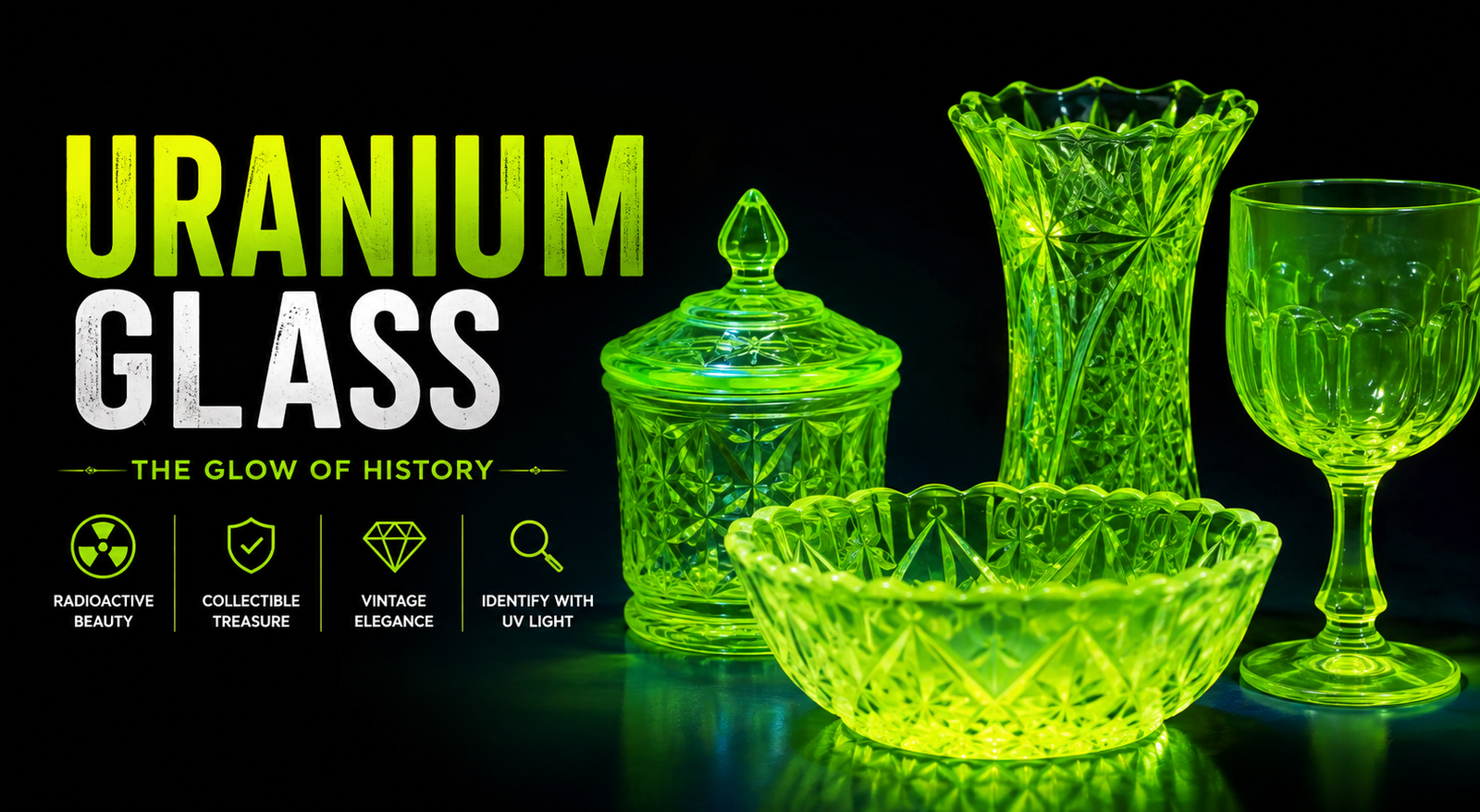
Uranium glass has fascinated collectors, antique enthusiasts, and history lovers for generations. Known for its vibrant green or yellow appearance and its brilliant glow under ultraviolet (UV) light, this unique glassware has become increasingly popular in recent years. Whether you’re exploring antique shops, attending estate sales, or browsing uranium glass for sale online, understanding what makes these pieces special is essential before starting a collection.
Despite its name, many people wonder, is uranium glass dangerous or is uranium glass radioactive? These are common questions, and the answers are often less alarming than people expect. Uranium glass contains a small amount of uranium oxide that gives it its distinctive color and fluorescent glow, but most collectible pieces are considered safe for casual handling and display.
This guide explains everything you need to know about uranium glass, including its history, how it glows, how to identify authentic pieces, whether it is valuable, and practical tips for beginners who want to collect with confidence.
What Is Uranium Glass?
Uranium glass is decorative glass made by adding a small amount of uranium oxide during manufacturing. The uranium acts as a coloring agent, producing shades that range from pale yellow and lime green to deeper emerald hues. One of its most recognizable features is its bright green fluorescence when exposed to ultraviolet light.
Most antique uranium glass contains only a small percentage of uranium, usually between 0.1% and 2% by weight. While that may sound concerning, the amount is generally low enough that these items are primarily valued as decorative collectibles rather than hazardous materials.
Unlike ordinary colored glass, uranium glass reacts to UV light because uranium compounds fluoresce, creating the glowing effect collectors love.
Why Is It Called Uranium Glass?
The name comes directly from the uranium oxide used during production. Although uranium is commonly associated with nuclear energy, the uranium found in antique glass serves only as a coloring ingredient. This distinction helps explain why the glass behaves differently from radioactive materials used in industrial or scientific settings.
A Brief History of Uranium Glass
The history of uranium glass dates back to the early 19th century when European glassmakers began experimenting with uranium compounds to create striking colors. Bohemian craftsmen were among the first to produce these distinctive decorative pieces.
During the Victorian era, uranium glass became fashionable for elegant tableware, vases, serving dishes, and ornamental decorations. Manufacturers appreciated its unique appearance, while consumers admired its vivid colors.
Production expanded further during the Great Depression, when colorful household glassware became popular in North America. Many pieces from this period are now highly collectible.
During World War II, commercial uranium supplies were redirected for military research, causing most manufacturers to stop producing uranium glass. Although limited production resumed later, antique pieces remain the most sought-after among collectors today.
Why Does Uranium Glass Glow?
The famous glow is caused by fluorescence rather than radioactivity. When ultraviolet light shines on uranium compounds within the glass, the compounds absorb invisible UV energy and immediately release visible green light.
Without UV light, most uranium glass simply appears green or yellow. It does not glow continuously in darkness.
Which UV Flashlight Works Best?
Collectors often use portable UV flashlights to test antique glass.
| UV Light | Brightness | Best Use | Recommendation |
| 365 nm | Very Bright | Accurate identification | Best choice |
| 395 nm | Moderate | Casual collecting | Good alternative |
A quality 365 nm flashlight usually produces the brightest fluorescence, making identification easier.
Is Uranium Glass Radioactive?
One of the most searched questions is is uranium glass radioactive.
The simple answer is yes—but only at very low levels.
Because uranium oxide is part of the glass, collectible uranium glass emits a small amount of radiation. However, for most decorative pieces, radiation levels are generally considered low and comparable to everyday background exposure encountered naturally in the environment.
Most collectors safely display uranium glass in cabinets or shelves without concern. Museums around the world also exhibit uranium glass as part of historical collections.
Is Uranium Glass Dangerous?
Another common question is is uranium glass dangerous.
For ordinary collecting, displaying, or occasional handling, antique uranium glass is generally considered safe. The greatest concerns involve damaged or powdered glass rather than intact pieces.
To collect responsibly:
- Avoid eating or drinking regularly from antique uranium glass.
- Do not intentionally chip, grind, or break pieces.
- Wash your hands after handling dusty antiques.
- Store valuable pieces where children and pets cannot accidentally damage them.
- Display items in secure cabinets to prevent breakage.
These simple precautions are enough for most collectors.
Uranium Glass Benefits
Many people search for uranium glass benefits, but the advantages are primarily related to collecting and history rather than health.
Some notable benefits include:
- Unique fluorescent beauty under UV light.
- Historical significance dating back nearly two centuries.
- Excellent conversation pieces for home displays.
- Growing popularity among antique collectors.
- Potential appreciation in value for rare examples.
- Wide variety of colors, patterns, and manufacturers.
For enthusiasts, the combination of history, craftsmanship, and scientific curiosity makes uranium glass one of the most interesting collectible glass categories available.
Uranium Glass How to Identify
Learning uranium glass how to identify is one of the most valuable skills for beginners. While the glow under UV light is the easiest clue, experienced collectors examine several characteristics before confirming authenticity.
Check the Color
Most authentic uranium glass appears in shades such as:
- Lime green
- Yellow-green
- Pale yellow
- Olive green
- Custard white
- Soft amber
Not every green glass item contains uranium, so color alone is never enough.
Test Under UV Light
A UV flashlight remains the most reliable identification tool.
Authentic uranium glass produces a vivid green fluorescence almost instantly when exposed to ultraviolet light.
If the glow appears weak, dull, or a different color, the piece may contain manganese, selenium, or other compounds instead.
Examine the Craftsmanship
Older uranium glass often features:
- Pressed decorative patterns
- Hand-finished edges
- Mold seams consistent with antique production
- Minor manufacturing imperfections that indicate age
Modern reproductions usually appear more uniform.
Look for Manufacturer Marks
Many collectible pieces were produced by well-known glass companies. Original maker’s marks, logos, or pattern numbers can significantly improve identification and value.
Compare Similar Pieces
Experienced collectors rarely rely on a single feature. Instead, they compare color, fluorescence, weight, craftsmanship, and manufacturer details before purchasing a piece.
Quick Identification Checklist
✔ Bright green glow under UV light
✔ Green or yellow base color
✔ Antique-style craftsmanship
✔ Consistent decorative patterns
✔ Reputable manufacturer or known pattern
✔ No obvious signs of modern reproduction
Mastering these simple techniques will help you identify authentic uranium glass with greater confidence and avoid common mistakes when shopping at antique stores, flea markets, or online marketplaces.
Uranium Glass vs. Other Glowing Glass
Not every piece of glowing glass is uranium glass. Several other types of vintage glass fluoresce under UV light, which can confuse new collectors. Knowing the differences can help you make informed purchases.
| Feature | Uranium Glass | Manganese Glass | Selenium Glass | Cadmium Glass |
| Glow Color | Bright green | Soft green | Pink to orange | Yellow to orange |
| Best UV Light | 365 nm | 365 nm | 365 nm | 365 nm |
| Contains Uranium | Yes | No | No | No |
| Collector Demand | High | Moderate | Moderate | Growing |
| Typical Value | Medium to High | Low to Medium | Medium | Medium |
Understanding these differences reduces the chances of mistakenly purchasing mislabeled glass.
Uranium Glass vs. Vaseline Glass
The terms “uranium glass” and “Vaseline glass” are often used interchangeably, but they are not exactly the same.
Uranium glass refers to any glass containing uranium oxide. Vaseline glass is a specific type of uranium glass that has a transparent yellow or yellow-green color resembling petroleum jelly.
In simple terms, all Vaseline glass is uranium glass, but not all uranium glass is Vaseline glass. Other varieties include custard glass, Burmese glass, jadeite, and certain Depression glass pieces.
Popular Types of Uranium Glass
Collectors encounter many beautiful styles, including:
Vaseline Glass
Transparent yellow-green glass famous for its bright fluorescence.
Depression Glass
Affordable household glassware produced mainly during the 1920s and 1930s, with many uranium-containing pieces.
Custard Glass
Opaque pale yellow or cream-colored glass with a soft glow under UV light.
Burmese Glass
Elegant glass featuring pink and yellow color gradients, often hand-decorated.
Jadeite
Opaque green glass that occasionally contains uranium depending on the manufacturer and production period.
Is Uranium Glass Valuable?
Many beginners ask, is uranium glass valuable?
The answer depends on several factors. While common plates or cups may sell for modest prices, rare pieces from well-known manufacturers can be worth hundreds or even thousands of dollars.
The most important value factors include:
- Manufacturer
- Age
- Rarity
- Condition
- Pattern
- Color
- Demand among collectors
Limited-production items and unusual decorative pieces generally command the highest prices.
Uranium Glass Price Guide
The following estimates represent common market ranges. Actual prices vary depending on rarity and condition.
| Item | Typical Price Range |
| Small Cup | $15–$40 |
| Dinner Plate | $20–$60 |
| Bowl | $30–$100 |
| Vase | $60–$250 |
| Pitcher | $80–$350 |
| Candy Dish | $50–$180 |
| Oil Lamp | $150–$700+ |
| Rare Figurine | $250–$2,000+ |
Before purchasing expensive items, compare recent auction results and consult an experienced antique appraiser if necessary.
Where to Find Uranium Glass for Sale
If you’re looking for uranium glass for sale, there are plenty of places to search.
Popular sources include:
- Antique stores
- Estate sales
- Flea markets
- Antique malls
- Collector shows
- Online auction websites
- Vintage collectibles marketplaces
When buying online, request clear photographs taken both in normal lighting and under UV light. Also ask about chips, cracks, repairs, and maker’s marks before completing a purchase.
Buying Tips for Beginners
Starting a uranium glass collection doesn’t require a large budget. Many attractive pieces remain affordable.
Here are a few practical tips:
- Buy from reputable sellers whenever possible.
- Carry a 365 nm UV flashlight when shopping.
- Learn to recognize common manufacturers and patterns.
- Inspect every piece carefully for damage.
- Avoid paying premium prices without researching comparable sales.
- Start with inexpensive pieces before investing in rare collectibles.
Patience often leads to better finds than rushing into expensive purchases.
How to Avoid Fake Uranium Glass
As demand grows, mislabeled and reproduced pieces have become more common.
Watch for these warning signs:
- A green color without UV fluorescence.
- Sellers who cannot provide UV photographs.
- Extremely low prices for supposedly rare items.
- Fresh-looking glass advertised as Victorian antiques.
- Modern reproductions lacking authentic maker’s marks.
Always evaluate multiple characteristics rather than relying on color alone.
Cleaning and Caring for Uranium Glass
Proper care helps preserve both beauty and value.
Follow these simple guidelines:
- Wash gently with mild soap and lukewarm water.
- Avoid abrasive cleaners or scouring pads.
- Dry with a soft microfiber cloth.
- Store pieces separately to prevent scratches.
- Display valuable items in enclosed cabinets to reduce dust and accidental damage.
Never expose antique glass to sudden temperature changes, as thermal shock can cause cracks.
Can You Still Buy Newly Made Uranium Glass?
Yes. Some specialty glass artists and manufacturers still produce uranium glass in limited quantities where regulations allow.
Modern uranium glass often appeals to collectors because of its vivid fluorescence, but antique examples generally remain more desirable due to their historical significance and craftsmanship.
Common Myths About Uranium Glass
Several myths continue to circulate online.
Myth: Uranium glass glows all the time.
Fact: It only fluoresces under ultraviolet light.
Myth: Every green antique glass item contains uranium.
Fact: Many green glasses use different minerals and do not contain uranium.
Myth: Uranium glass is extremely dangerous.
Fact: Intact decorative pieces are generally considered safe for normal display and occasional handling.
Myth: Every glowing glass item is valuable.
Fact: Value depends on rarity, condition, manufacturer, and collector demand.
Expert Tips for New Collectors
Experienced collectors recommend focusing on knowledge before spending large amounts of money.
- Study manufacturer marks.
- Learn popular patterns.
- Visit museums and antique exhibitions.
- Compare similar pieces before purchasing.
- Keep records of every item in your collection.
- Photograph purchases under both normal and UV lighting.
- Consider professional appraisals for rare or high-value finds.
Building experience gradually is often the best way to create a meaningful and valuable collection.
Conclusion
Uranium glass is far more than a glowing antique. It represents an intriguing combination of history, science, craftsmanship, and collectible appeal. Whether you’re curious about is uranium glass radioactive, wondering is uranium glass dangerous, learning uranium glass how to identify, or asking is uranium glass valuable, understanding the facts helps you collect with confidence.
By using a quality UV flashlight, learning manufacturer marks, comparing patterns, and purchasing from reputable sellers, you can build a collection that is both enjoyable and potentially valuable. Whether you’re buying your first decorative bowl or searching for a rare Victorian masterpiece, informed decisions will always be your greatest collecting tool.
Frequently Asked Questions
1. Is uranium glass radioactive?
Yes. Uranium glass contains small amounts of uranium, so it emits low levels of radiation. Most intact collectible pieces are considered safe for normal display and handling.
2. Is uranium glass dangerous?
For most collectors, no. Avoid breaking the glass, grinding it, or regularly using antique pieces for food and drinks.
3. Uranium glass how to identify?
Use a 365 nm UV flashlight, examine the color, inspect craftsmanship, check for maker’s marks, and compare the piece with known authentic examples.
4. Is uranium glass valuable?
Yes. Common pieces may be inexpensive, while rare examples from famous manufacturers can be worth hundreds or even thousands of dollars.
5. Where can I find uranium glass for sale?
You can find uranium glass at antique stores, estate sales, flea markets, collector fairs, and reputable online marketplaces.
6. What are the uranium glass benefits?
Its unique fluorescence, historical significance, artistic craftsmanship, and collectible value make uranium glass appealing to enthusiasts around the world.
You May Also Read: owala water bottle